2027: Rotimi Amaechi, his son, and politics of inheritance
By Luminous Jannamike, ABUJA
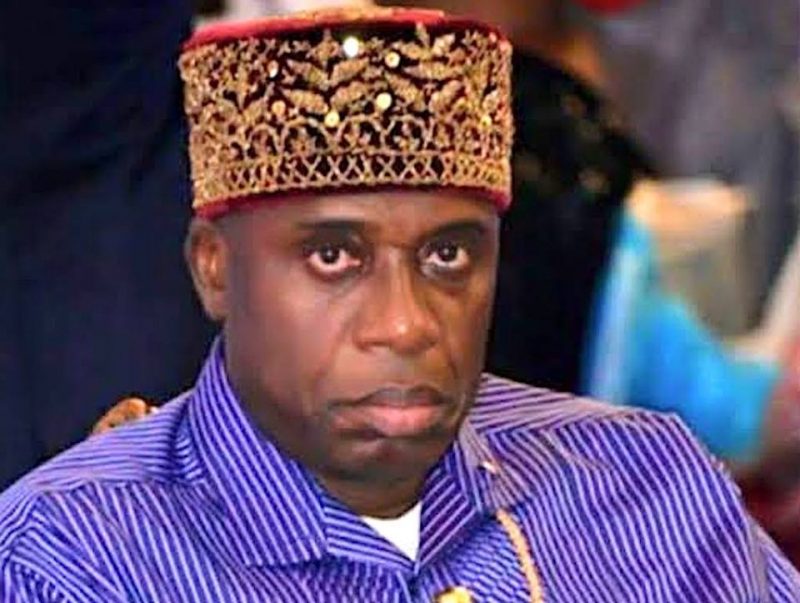
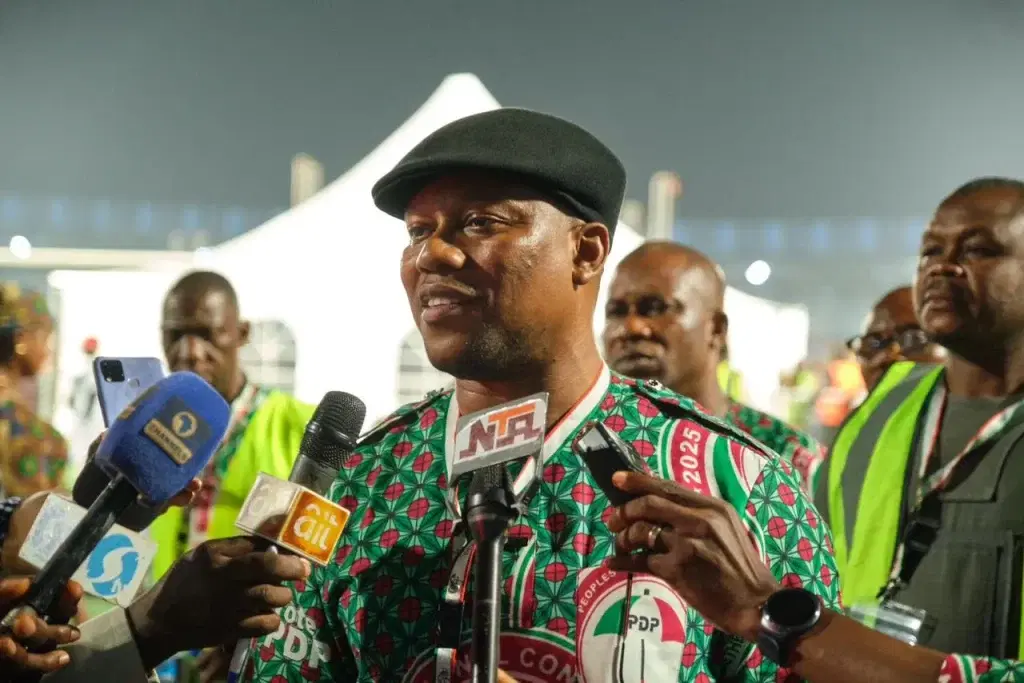
Rotimi Amaechi, former governor of Rivers State and ex-Minister of Transportation, joined a protest at the National Assembly last Tuesday, accompanied by his son. The demonstration focused on calls for the electronic transmission of election results.
As protesters waved placards and lawmakers navigated security barricades, Amaechi’s presence with his son drew attention amidst the fervent atmosphere. Responding to criticism regarding the involvement of family members in political activism, Amaechi explained, “There are those who say politicians call for protests while their children are abroad. Here is my first son. I brought him to join this protest. He is a medical doctor and his responsibility is to attend to anyone who may be injured.”
Some supporters interpreted this move as a rebuttal to allegations of hypocrisy, while others remained skeptical.
In Nigeria’s political landscape, early exposure to high-level events often signifies the start of a political career. A protester noted the challenges faced by outsiders: “Many of us came here believing our voices would matter. But when you stand here and watch who already walks in and out of these places like they belong, you start to realize something—some people were born into this access. For the rest of us, we’re still trying to find the door.”
In Abuja, proximity to power is often seen as a key to influence, with the capital serving as both a legislative hub and a breeding ground for networking opportunities. This trend is reflected across Nigeria, where children of prominent politicians frequently accompany their parents to official engagements and may later pursue political careers themselves.
The legacy of former Senate Leader Olusola Saraki, for example, established a long-standing political dynasty in Kwara State. His son, Bukola Saraki, eventually served two terms as governor and later as Senate President. Similarly, in Ebonyi State, the son of Works Minister Dave Umahi has recently stepped into grassroots politics after securing a local government party ticket, highlighting the generational transfer of political power.
While some political dynasties succeed, they do not always maintain dominance. Voter resistance has at times disrupted traditional power structures, as evidenced by the 2019 political upheaval in Kwara, driven by the “O to ge” movement. This grassroots initiative underscored the potential for significant change, challenging entrenched political families.
In Kaduna, the son of former governor Nasir El-Rufai has transitioned from an advisory role during his father’s administration to a seat in the House of Representatives, further illustrating how political exposure can facilitate early entry into governance.
The increasing visibility of political families, including that of FCT Minister Nyesom Wike and President Bola Tinubu’s son, Seyi Tinubu, raises discussions about the nature of political influence and inheritance in Nigeria. Many observers have noted the blurred lines between family ties and public service.
Critics of entrenched political dynasties argue that they hinder democratic processes within parties, limiting opportunities for new candidates. The circulation of resources and influence among a select few risks reducing elections to contests between established networks rather than open debates on policy.
Proponents of political families argue that exposure fosters essential leadership skills, asserting that it does not necessarily equate to entitlement. However, critics maintain that when influence is combined with lineage, the competitive landscape becomes imbalanced.
Human rights advocate Joseph Ikechukwu Nwakaibeya remarked on the importance of accountability in leadership, contrasting the practices of past and current administrations. He noted that while former President Muhammadu Buhari kept his family away from government affairs, leading to a perception of integrity, allegations of nepotism have emerged in President Tinubu’s administration.
Public affairs commentator Oluwatobiloba Adebayo suggested that the grooming of political heirs reflects a deliberate strategy to ensure continuity of power among established families, criticizing the public’s distraction with frivolous debates while political dynamics remain unchanged.
As the protest concluded and normalcy returned to the area around the National Assembly, the image of Amaechi and his son lingered—a quiet reminder of the ongoing debate over whether Nigeria’s democracy will expand to allow broader access to leadership or whether it will remain a realm largely dictated by familial connections.