Trump Withdraws Canada’s Board of Peace Invitation After PM Carney’s Explosive Davos Speech
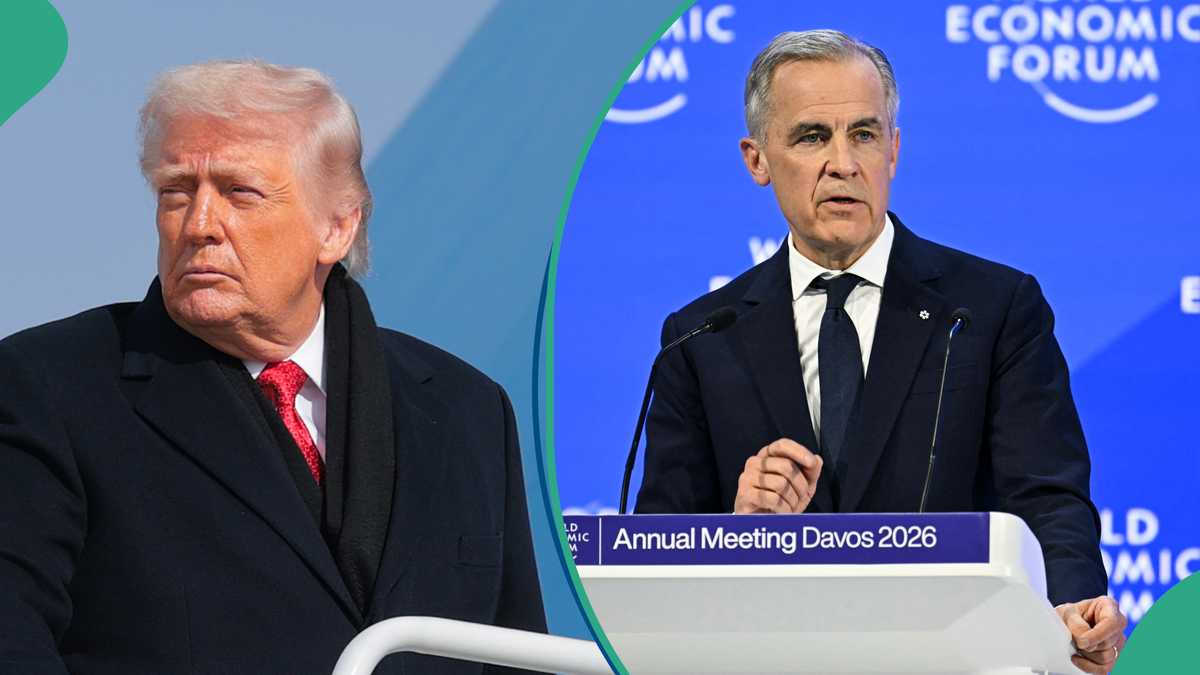
On January 22, President Donald Trump announced the withdrawal of Canada’s invitation to participate in the newly formed Board of Peace, a controversial initiative aimed at resolving global conflicts. This decision escalated diplomatic tensions between the United States and Canada, particularly with Prime Minister Mark Carney, who had previously indicated a willingness to join but was hesitant about the $1 billion membership fee proposed for permanent members.
Trump’s announcement was made via a post on Truth Social, where he did not elaborate on the rationale behind the withdrawal. Canada had shown interest in joining the board but had also expressed concerns regarding its financial requirements. The Board of Peace is presented as a new international organization led by Trump, giving him extensive authority as chairman.
Initial intentions for the Board seemed focused on addressing the Israel-Hamas conflict and overseeing reconstruction in Gaza; however, the draft charter notably lacks specific references to the Palestinian territory. While about 60 countries have been invited, including notable Middle Eastern countries like Qatar and Saudi Arabia, key permanent members of the UN Security Council—China, France, Russia, and the UK—have not committed to joining. France has publicly voiced concerns about the compatibility of the board’s charter with its international obligations.


European leaders have expressed serious reservations regarding the board’s governance and scope. European Council President Antonio Costa highlighted these doubts after an EU summit, indicating a desire to maintain cooperation with the U.S. on Gaza but under a transitional framework rather than through the Board of Peace.
Diplomatic strains were further exacerbated following remarks made by Carney at the World Economic Forum in Davos. There, he discussed potential disruptions to the U.S.-led global order and encouraged collaboration among middle powers against economic coercion, subtly alluding to the U.S. Trump retaliated at the forum, asserting that Canada’s prosperity is closely tied to the United States, a claim Carney disputed, insisting that Canada thrives independently because of its own national identity.
Adding to the doubts concerning the Board of Peace’s viability, Spain confirmed its decision to decline the invitation to join. This indicates growing skepticism among Western allies regarding the initiative’s acceptance and effectiveness.
In summary, the Board of Peace, initially aimed at addressing urgent global issues, has become embroiled in international controversy, particularly with Canada’s withdrawal spotlighting the fragile nature of U.S.-Canada relations. As the board continues to face skepticism both at home and abroad, its future role in international diplomacy remains uncertain.


