How Modi ‘broke down walls’ between India, Israel – at Palestine’s expense | Narendra Modi
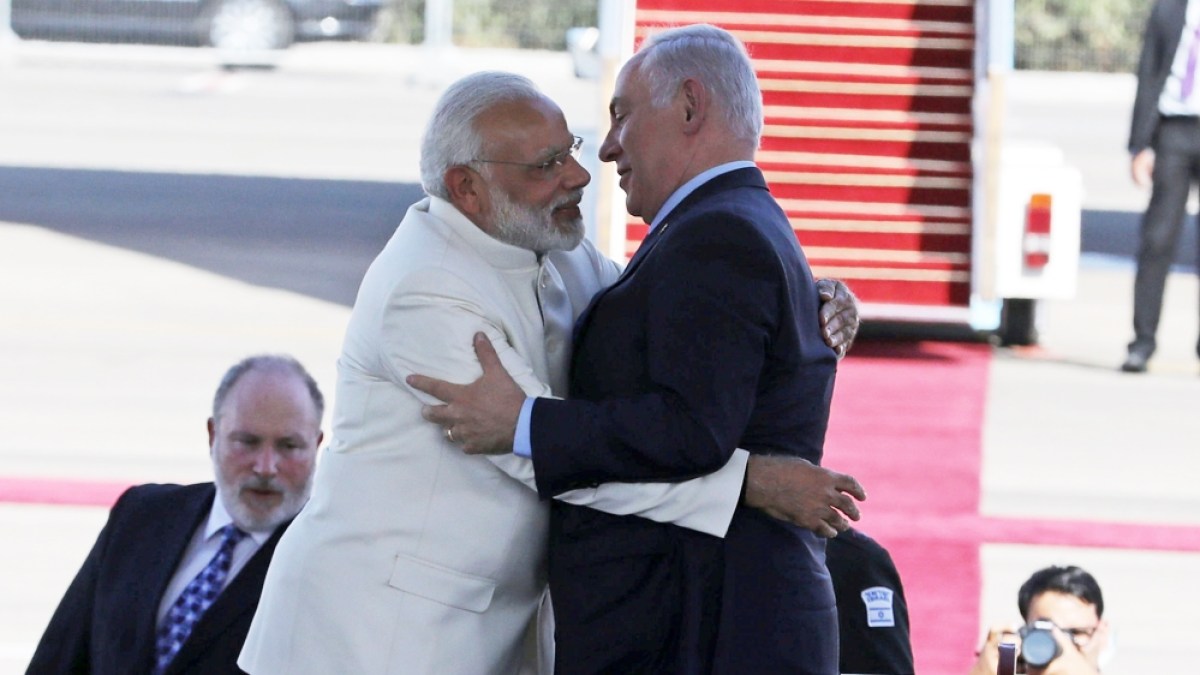
New Delhi, India – Indian Prime Minister Narendra Modi arrived at Ben Gurion Airport near Tel Aviv on February 25 for his second official visit to Israel, nearly nine years after he made history as the first Indian prime minister to do so in July 2017. Upon his arrival, Israeli Prime Minister Benjamin Netanyahu greeted Modi as they embraced on the tarmac.
During his previous visit, Modi described the trip as a “path-breaking journey.” Netanyahu reflected on their first meeting in New York in 2014, where the two leaders agreed to foster closer ties between India and Israel.
Analysts note that Modi has largely fulfilled his initial mission to strengthen India-Israel relations. Once viewed unfavorably by some in India, this partnership is now one of the most prominent international friendships for New Delhi. Modi often refers to Netanyahu as a “dear friend,” despite a 2024 arrest warrant issued by the International Criminal Court against the Israeli leader for alleged war crimes during the ongoing conflict in Gaza.


Indian officials have characterized this shift toward Israel as a pragmatic response to the country’s technological and military expertise, while also emphasizing New Delhi’s commitment to maintain relationships with its Arab allies. However, this pivot has raised concerns regarding India’s historical support for Palestine and its implications for the country’s moral standing, according to some experts.
Anwar Alam, a senior fellow at the Policy Perspectives Foundation in New Delhi, stated that India’s turn toward realism has diminished its moral influence in the Global South. He criticized Modi’s upcoming visit to Israel amid ongoing violence, suggesting that it legitimizes Israel’s actions in Palestinian territories.
Historically, India has been a strong proponent of Palestinian independence, opposing the United Nations’ plan to partition Palestine in 1947 and recognizing Palestine as a state in 1988. However, following the end of the Cold War, India established diplomatic relations with Israel in 1992, which has since evolved into a robust partnership, particularly in defense.
Modi’s rise to power in 2014 marked a significant shift in India’s foreign policy. His Hindu nationalist Bharatiya Janata Party (BJP) has aligned ideologically with Israel’s self-identification as a Jewish homeland. Both leaders cite “Islamic terrorism” as a major concern, which has further intensified their defense cooperation.
India is now Israel’s largest defense importer, and during the ongoing conflict in Gaza, Indian arms manufacturers reportedly supplied munitions to Israel. Ahead of Modi’s visit, the two countries signed a memorandum of understanding aimed at enhancing defense collaboration, including joint developments in missile defense systems. Modi is also expected to address the Knesset, Israel’s parliament.
The visit is particularly significant for Netanyahu, who faces national elections amid scrutiny over his government’s performance. Analysts suggest that Modi’s presence may bolster Netanyahu’s standing as statesman during this sensitive political period, especially as few leaders from the Global South have traveled to Israel since the onset of the Gaza conflict.
Kabir Taneja, executive director of the Middle East office at the Observer Research Foundation, noted that Modi’s visit symbolizes that Israel is not completely isolated on the international stage.
Reflecting on their previous encounter in July 2017, Modi’s upcoming trip continues a trajectory that has largely favored Israel. Despite India’s historical ties to the Palestinian cause, the current administration has increasingly refrained from criticizing Israeli actions in the occupied territories.
India’s past support for Palestine stemmed from its role in the non-alignment movement during the Cold War, a position that is now reframed as “strategic autonomy.” Taneja commented that India’s relations with Israel, Arab countries, and Iran illustrate the potential for a balanced approach.
For instance, under pressure from the Trump administration, India curtailed oil imports from Iran and began limiting its engagement with projects such as the Chabahar port.
Looking ahead, analysts speculate that India may be positioning itself to benefit from shifting regional power dynamics, particularly as a more dominant Israel emerges.


