Governors’ defections won’t decide 2027, Tinubu lost Lagos despite APC control – Aregbesola

Rauf Aregbesola, the National Secretary of the African Democratic Congress (ADC), emphasized that the results of the 2023 presidential election in Lagos serve as evidence that control over state governments does not guarantee electoral triumph. This remark was made during the public launch of “The Loyalist,” a book by Bolaji Abdullahi, the ADC’s National Publicity Secretary, in Abuja.
Aregbesola pointed out that the outcome in Lagos contradicted the prevalent notion that governors can secure votes disregarding the people’s preferences. Despite the All Progressives Congress (APC) asserting dominance in the South-West region at that time, it lost the presidential election in Lagos. He argued that the phenomena of the state’s electoral results underscored an essential truth: the electorate, rather than governors or their influence, ultimately determines the elections’ outcomes.
His comments arose amid a significant wave of defections by governors previously elected under the Peoples Democratic Party (PDP) to the APC, including notable figures such as Umo Eno from Akwa Ibom and Douye Diri from Bayelsa among others. Aregbesola, who switched from APC to ADC last year, expressed concern regarding these defections, interpreting them as indicative of a potential drift toward a one-party state.

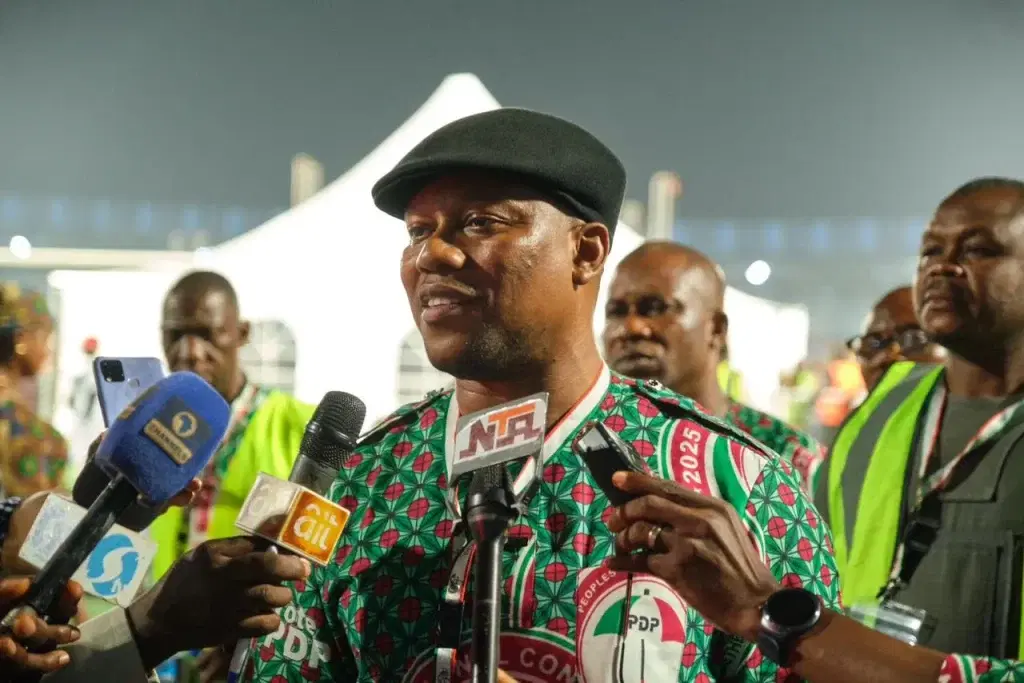

Expressing his views on the departing governors, Aregbesola underscored the necessity for the ruling party to ensure that the 2027 elections are conducted with integrity, emphasizing that genuine democratic processes are paramount. He stated, “Something is going on that is worrisome, especially for those of us who are democrats,” indicating discernment regarding the growing consolidation of power within the APC.
In elaborating on the election results, Aregbesola noted that even with a strong APC presence in much of the South-West, the party only achieved approximately 55% of the vote, leaving the remainder to other parties. He recounted the specific case of Lagos where the APC candidate failed to secure his own ward, local government, or even the state itself. Furthermore, he pointed out the dismal 5.8% vote share that APC garnered from the South-East, thereby illustrating a significant disconnect between political leadership and voter sentiment.
Aregbesola reiterated that the fundamental factor in any election’s outcome is the commitment of the electoral authorities to administer a free and fair electoral process. He insisted that if the integrity of elections is prioritized, the truth of voting outcomes will emerge, thus promoting genuine democracy. This perspective aims to invigorate the political discourse, demonstrating that the will of the people ultimately prevails over the machinations of party governance.
In summarizing his key points, Aregbesola stressed that the recent electoral scenario validates that electoral victories stem from the electorate’s collective choice rather than the influence of political leaders. His insights reflect a significant shift in the dynamics of Nigerian politics, urging a renewed emphasis on the principles of democracy in future elections.