Nigeria’s money supply drops slightly to N123trn

Nigeria’s Money Supply Decreases Slightly in January 2026
By Elizabeth Adegbesan
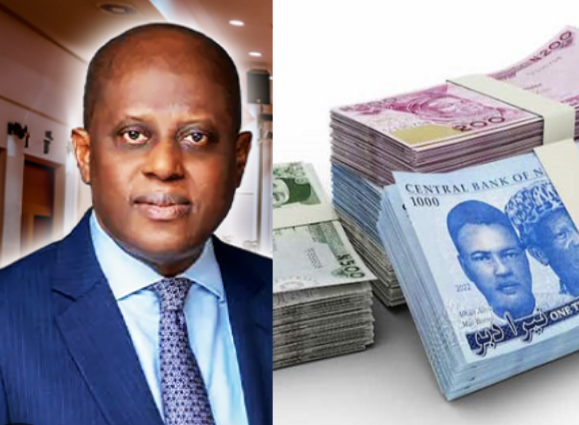
Nigeria’s money supply (M²) decreased by 0.8 percent from December 2025, totaling N123.4 trillion in January 2026. This drop highlights a continuing trend of low liquidity in the banking sector, coinciding with a decline in interest rates.


Data from the Central Bank of Nigeria (CBN) indicates that the interest rate on Open Market Operations (OMO) fell by 2.2 percentage points in January, settling at 17.2 percent, down from 19.4 percent in December 2025.
In a report released by the CBN, it was noted that all components of M² decreased during this period, with the exception of narrow money and demand deposits. Quasi money, which includes highly liquid, non-cash assets, fell by 1.2 percent to N81 trillion. Currency outside banks saw a sharper decline of 3.7 percent, dropping to N5.2 trillion.
Conversely, demand deposits rose by 1.14 percent, reaching N37.12 trillion, up from N36.7 trillion in December 2025.
The decline in M² was mirrored in the net domestic credit figures, which showed a reduction in credit to both the government and the private sector. Specifically, credit to the government dipped by 0.11 percent to N34.18 trillion, while credit to the private sector fell by 0.79 percent to N75.2 trillion. This resulted in a total net domestic credit of N109.4 trillion, reflecting a 0.59 percent decrease from December 2025.
As of September 2025, Nigeria’s public debt stood at N153.3 trillion, according to the Debt Management Office (DMO). While borrowing remains a viable fiscal strategy, experts emphasize that the effectiveness and productivity of borrowed funds are crucial for sustainability.
Analysts have pointed out that it is vital for borrowed resources to be utilized for capital expenditures that can generate economic value. They urge governments at all levels to focus on growth-oriented investments and strengthen revenue mobilization, while also avoiding excessive debt that could pose medium-term fiscal risks.