United Rugby Championship: Leinster come from behind to beat Edinburgh
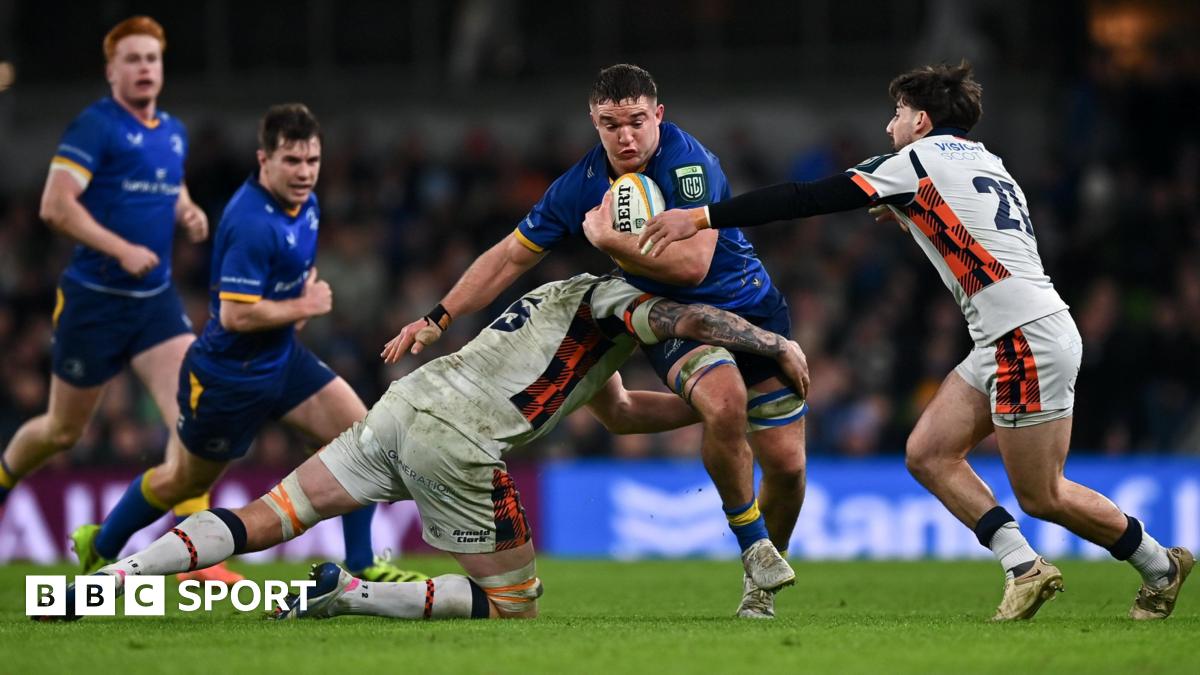
The match featured two rugby teams, Leinster and Edinburgh, with distinct lineups and strategies.
Leinster’s Starting XV:
The team was led by fullback Osborne, supported by a strong back line including wingers Kenny and Ioane, and centers Mangan and Moloney. In the half-back positions, Tector partnered with McGrath, establishing a solid playmaking duo. The front row consisted of Cahir, McKee, and Sparrow, providing a cohesive and aggressive foundation in the scrum.
The lock pairing featured Snyman and Deeney, designed for power in the lineouts. The back row included a mix of experience and youth with Deegan, Penny, and Mangan. Leinster’s bench included McCarthy, Usanov, Smyth, O’Tighearnaigh, Eriscon, Connors, Gunne, and McLaughlin, providing tactical options for substitutions throughout the match.
Edinburgh’s Starting XV:
In contrast, Edinburgh fielded Paterson as their fullback, supported by Satala and Goosen as wingers, while Lang and Van der Merwe took the center positions. Thompson and Vellacott formed the half-back pairing, known for their agility and quick decision-making. The forwards featured Venter, J. Blyth-Lafferty, and Hill in the front row, ensuring strength at the scrum.
They had a formidable second row with Hunter-Hill and Young, while the back row consisted of Muncaster, Douglas, and Bradbury, combining physicality with speed. Edinburgh’s replacements included Morris, Jones, O. Blyth-Lafferty, Dodd, Boyle, Shiel, Scott, and O’Conor, providing depth and experience off the bench.
Game Strategy Highlights:
Leinster’s strategy hinged on a robust set piece and a dynamic back line, harnessing the speed of their wingers and the tactical kicking from their fly-half. Their forwards aimed to dominate territory and provide solid ball for the backs to exploit gaps in Edinburgh’s defense.
On the other hand, Edinburgh looked to establish quick ball from rucks and leverage their agile half-backs to create scoring opportunities. The interplay between their forwards and backs was crucial for executing set plays effectively.
Match Implications:
The encounter was significant for both teams, as they aimed to assert dominance in the league. Leinster, with a well-rounded side, aimed for a comprehensive performance. Edinburgh, while fielding a well-composed squad, looked to exploit any weaknesses in Leinster’s defense through strategic plays and quick recycling of the ball.
Overall, the match showcased a clash of styles, with Leinster’s power and pace pitted against Edinburgh’s agility and tactical acumen, promising an exciting contest for fans and a critical challenge for both squads.