US stocks cut losses after Trump announces steps to safeguard Hormuz Strait
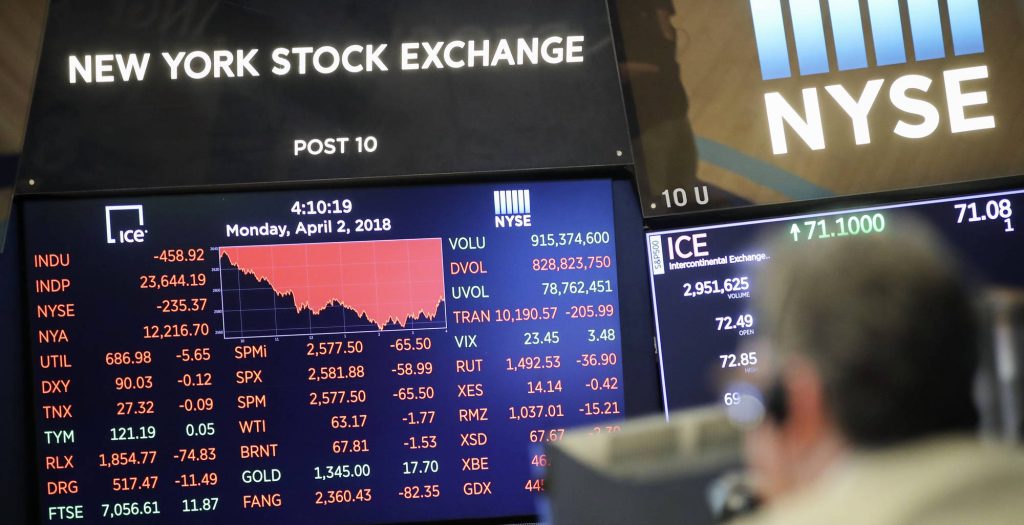
U.S. Stocks Recover Slightly Amid Rising Oil Prices and Geopolitical Tensions
U.S. equities experienced a broad decline on Tuesday, contributing to a global market sell-off driven by rising oil prices. However, losses were mitigated following President Donald Trump’s announcement of measures to protect commercial shipping in the Strait of Hormuz.
The Strait, a critical waterway for crude oil transport, accounts for approximately 20% of global supplies and has seen significantly reduced traffic since military actions commenced against Iran by the United States and Israel over the weekend.
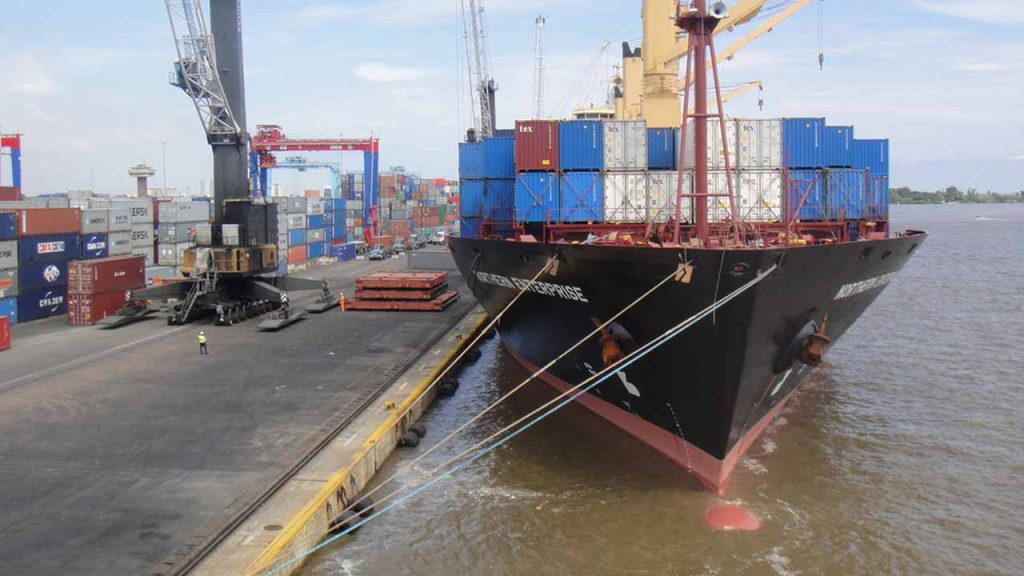

Brent crude prices surged early Tuesday, exceeding $85 per barrel for the first time since July 2024. This spike was fueled by concerns that prolonged inactivity in the Strait could lead to even higher prices. By the day’s end, Brent settled at $81.40 per barrel, up 4.7%, following Trump’s declaration that the U.S. Navy would escort oil tankers through the strait if necessary and that the U.S. would provide insurance for shipping.
Art Hogan, chief market strategist at B. Riley Wealth Management, noted that the stabilization of oil prices provided some relief to the stock market. The S&P 500 index closed down 0.9% at 6,816.63, recovering more than 100 points from earlier lows.
“Higher energy prices are a drag on the economy,” Hogan said, emphasizing that even short-term alleviation can be beneficial for market sentiment.
European markets faced significant losses during the session, with London’s FTSE 100 declining by 2.8% and both Frankfurt’s DAX and Paris’ CAC 40 dropping over 3%. Joshua Mahony, chief market analyst at Scope Markets, attributed these declines to the inflationary pressures resulting from the ongoing conflict in Iran.
Recent data indicating an unexpected rise in eurozone core inflation added to market anxieties. Philip Lane, chief economist of the European Central Bank, cautioned in an interview that extended conflict in the Middle East could lead to a “spike” in inflation within the eurozone and impede regional growth.
Natural gas prices in Europe also surged, with the Dutch TTF contract rising over 40% to exceed 60 euros, the highest level since January 2023. This increase followed a previous spike of 50% after Qatar’s state-owned energy company announced it had halted liquefied natural gas production due to strikes.
Meanwhile, ongoing military operations by the U.S. and Israel targeted positions in Tehran, leading to retaliatory actions from Iran and escalations in the region.
The implications of rising energy costs present challenges for central banks as they strive to manage inflation while supporting economic growth. Economists from Capital Economics predict that the U.S. Federal Reserve, European Central Bank, and several Asian central banks may postpone interest rate cuts, while some central banks in Latin America and Central Europe may face pressure to increase rates.
In currency markets, the dollar strengthened against major currencies, reflecting a preference for safer assets during periods of uncertainty.
Key Market Figures as of Tuesday Evening:
- West Texas Intermediate: Up 4.7% at $74.56 per barrel
- Brent North Sea Crude: Up 4.7% at $81.40 per barrel
- Dow Jones Industrial Average: Down 0.8% at 48,501.27
- S&P 500: Down 0.9% at 6,816.63
- Nasdaq Composite: Down 1.0% at 22,516.69
- FTSE 100: Down 2.8% at 10,484.13
- CAC 40: Down 3.5% at 8,103.84
- DAX: Down 3.4% at 23,790.65
- Nikkei 225: Down 3.1% at 56,279.05
- Hang Seng Index: Down 1.1% at 25,768.08
- Shanghai Composite: Down 1.4% at 4,122.68
Currency Exchange Rates:
- Euro/Dollar: Down to $1.1617 from $1.1688
- Pound/Dollar: Down to $1.3358 from $1.3407
- Dollar/Yen: Up to 157.59 yen from 157.39 yen
- Euro/Pound: Down to 86.98 pence from 87.18 pence.