Explainer: Election results collation chain that decides Nigeria’s president
By Omeiza Ajayi
ABUJA – The announcement of Nigeria’s president is not determined by a single national vote tally. Rather, it is a cumulative process involving several collation officers who certify results that ascend from individual polling units to the Independent National Electoral Commission (INEC).
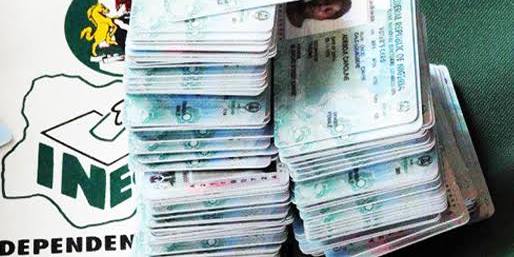
Voting procedures commence with the accreditation of voters using the Bimodal Voter Accreditation System (BVAS). After voting concludes, the presiding officer counts the ballots publicly, recording the votes for each political party on Form EC8A, the polling unit result sheet. The presiding officer signs this form, which is subsequently countersigned by polling agents present at the unit. A poster version of this form, known as Form EC60E, is displayed at the polling unit for transparency.
After polling, the results move through a hierarchical collation system. INEC’s former chairman, Mahmood Yakubu, outlined that the 2023 electoral process encompassed “four levels”: ward, local government area (LGA), state, and national. At each stage, the respective officer tallies results from the previous level before recording them on a new form.
At the ward level, the collation officer aggregates the Form EC8A sheets and compiles the total on Form EC8B. The local government officer then consolidates the ward totals into Form EC8C. At the state level, the State Collation Officer for the Presidential Election (SCOPE) compiles results on Form EC8D. For instance, in Katsina State during the 2023 elections, there were 3,516,719 registered voters, with 1,097,663 accredited and 1,058,673 valid votes recorded.
Atiku Abubakar of the Peoples Democratic Party (PDP) led the tally in Katsina with 489,045 votes, while Bola Tinubu of the All Progressives Congress (APC) followed closely with 482,283 votes.
The process culminates in Abuja, where the INEC chairman, now Joash Amupitan, acts as the returning officer for the presidential election. During the national collation stage, SCOPEs present the original Form EC8D for each state. Once all results are submitted, the returning officer displays sealed copies of Form EC8DA, which summarizes the state results, along with Form EC8E, the declaration sheet. Polling agents are then invited to offer comments before a winner is declared, receiving duplicate copies of the forms afterward.
Declaring the winner involves more than simply tallying votes; the returning officer must ensure that the winning candidate has not only the highest total but also achieved at least one-quarter of the votes in the required number of states, as stipulated in Section 134 of Nigeria’s Constitution.
For the 2023 election, INEC reported a total of 93,469,008 registered voters, with 25,286,616 accredited, 24,025,940 valid votes, and 939,278 rejected votes. Bola Tinubu secured 8,794,726 votes, while Atiku Abubakar garnered 6,984,520 votes. Peter Obi of the Labour Party received 6,101,533 votes, and Rabiu Kwankwaso of the New Nigeria Peoples Party obtained 1,496,687 votes.
Tinubu’s representatives asserted during court proceedings that he achieved the necessary 25 percent threshold in 29 states, whereas Atiku did so in 21 states, and Obi in 16 states plus the Federal Capital Territory.
A significant point of contention in the electoral process has been electronic transmission. INEC uploads polling unit results to its Result Viewing Portal (IReV). However, the Supreme Court ruled that failure to upload does not invalidate an election result, determining that the portal serves merely as a public viewing tool rather than a legal collation system.
The recently enacted Electoral Act 2026 mandates, as per Section 60(3), that presiding officers transmit Form EC8A to IReV. However, if the transmission fails due to communication issues, the signed Form EC8A remains the authoritative record for collation and declaration.
Senate Leader Opeyemi Bamidele characterized this as a clear directive for electronic transmission, though critics argue that it allows for manual collation to prevail as the definitive record.
The accuracy of the forms and who signs them will be crucial if the election results are contested. In declaring the results for the 2023 election, Yakubu stated that Tinubu was elected after fulfilling all legal requirements.
For further information, visit Vanguard News.