Agric ministry puts post-harvest loss at $10bn yearly
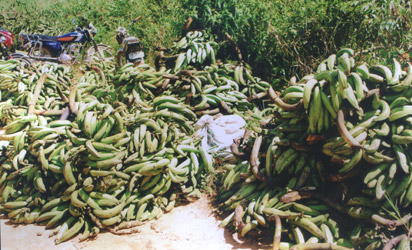
Nigeria Faces $10 Billion Annual Loss from Post-Harvest Issues, Says Minister
ABUJA — Nigeria loses an estimated $10 billion annually due to post-harvest losses, according to Senator Abubakar Kyari, the Minister of Agriculture and Food Security. Kyari addressed the issue during a panel discussion on “Productivity Revolution for Growth” at the 32nd Nigerian Economic Summit in Abuja on Tuesday.
The minister reported that losses in grains such as rice, maize, and millet range from 15 to 20 percent. In contrast, losses for perishable items like tomatoes, peppers, and onions can reach as high as 60 to 70 percent, depending on environmental conditions.



Kyari highlighted that improving storage, processing, transportation, and market infrastructure could significantly enhance food availability and increase farmers’ earnings. He emphasized the importance of addressing these post-harvest challenges as a critical step in Nigeria’s pursuit of food security.
“About 15 to 20 percent of grains are lost, and you may think that grains are less vulnerable, but significant losses occur,” he explained. “In the case of fruits and vegetables, particularly tomatoes, the waste is much higher due to their short shelf life and the effects of hot weather.”
The minister expressed concern over the performance of silo complexes, revealing that only three out of 17 federal silos operated by private entities are currently functional. “The majority of the silos have been nearly inactive since they were concessioned,” he added, attributing this to the disconnect between agricultural production areas and existing storage facilities.
Many farming communities are located more than 100 kilometers away from major storage sites, raising transportation costs and complicating the logistics of moving produce. Kyari stressed the need for a reevaluation of the country’s storage strategy, advocating for smaller, community-based silo systems that would be more accessible to farmers.
These new facilities would incorporate traditional grain storage methods while employing modern technology, including proper ventilation and renewable energy sources. Kyari proposed designing silos with varying capacities—ranging from 2,000 to 10,000 tonnes—tailored to the specific needs of local communities.
“We need both large-scale and community silo systems,” he stated, indicating that adapting local storage practices could improve access and reduce losses.
He further noted that the government’s food security strategy is shifting from solely ensuring availability to promoting the consumption of nutritious and diverse foods. He underscored the importance of evaluating food security not just by the quantity produced but by the nutritional quality accessible to households.
Additionally, Kyari acknowledged the need for greater national coordination in agricultural efforts. The newly established Presidential Food Systems Coordinating Unit aims to unite various sectors—agriculture, water resources, environment, and health—to tackle the interconnected challenges of food security and nutrition.
With roughly 85 to 90 percent of Nigerian farmers identified as smallholders, the minister pointed out that the fragmented structure of the agricultural sector remains a significant barrier to improving productivity. He indicated that the average farm size in Nigeria is approximately 0.6 hectares, about 6,000 square meters.