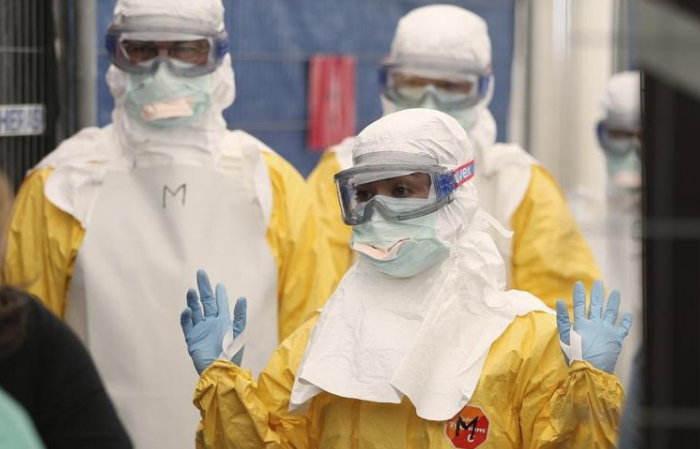
WHO Warns Of ‘Complex’ Ebola Outbreak In Africa

The World Health Organization (WHO) has issued a warning regarding a complex Ebola outbreak in Africa following the emergence of the virus in Nigeria. This incident marks the first reported case in West Africa related to the ongoing outbreak.
On Tuesday, Nigerian health officials announced an imported case of the Bundibugyo strain of Ebola in the wife of a diplomat who traveled from Uganda to Abuja. The Bundibugyo strain is currently linked to a significant outbreak in the Democratic Republic of the Congo (DRC).
Health Minister Muhammad Ali Pate confirmed on Thursday that health authorities have successfully traced the woman’s contacts since her arrival in Nigeria earlier this month. An undisclosed number of high-risk individuals have been isolated as a precaution.


“High-risk individuals have been quarantined fully in a facility,” Pate stated.
Nigeria, Africa’s most populous country, is the fourth nation on the continent to be affected by the current outbreak. Kenya has reported nine cases since October 6.
The outbreak, which originated in the DRC, has become the deadliest in the country’s history, with health authorities reporting over 4,000 deaths among more than 9,000 confirmed cases since mid-May. The Bundibugyo strain currently has no vaccine or specific treatment available.
“We are facing a more complex outbreak landscape,” said Mohamed Janabi, WHO’s regional director for Africa, during an online media briefing.
The Nigerian patient arrived in Abuja on October 3, after being in Uganda since September 16, according to WHO representative Pavel Ursu. She flew to Abuja on an Ethiopian Airlines flight and transited through Addis Ababa, as learned during an emergency meeting of the Nigeria Centre for Disease Control and Prevention (NCDC).
The woman is originally from Uganda but is based in Abuja. Africa Centres for Disease Control and Prevention Director General Jean Kaseya clarified that she did not visit the DRC, countering earlier speculation from Ugandan authorities who are resistant to linking new cases to Uganda after the country was declared Ebola-free earlier this year. Kaseya indicated that officials are attempting to reconstruct her travel history to determine possible exposure points, including potential contact at the airport with Kenya’s initial Ebola case, who also departed from Uganda on October 3.
Nigerian officials are determined to contain the outbreak, striving to prevent further transmission. “It is contained, so far, the imported case. We have no evidence it has spread into the communities,” Pate said at a news conference in Abuja. “Our focus is on contact tracing and ensuring that we know exactly where those contacts are.”
The situation has raised concerns reminiscent of the extensive Ebola outbreak in West Africa from late 2013 to 2016, which resulted in more than 11,000 deaths across multiple countries. During that outbreak, Nigeria managed to control the spread within its borders, reporting only 19 infections and seven fatalities.
While officials remain vigilant, anxiety among the public persists due to the high mortality rate in the DRC. In response, personnel at Lagos’ busy international airport are screening all international travelers. “I’m scared because we have been hearing about the news, the way people are dying in the Congo,” remarked Patrick Akwongu, a traveler arriving from Italy.
Conversely, Bezalel Mfashingabo, a Kenyan passenger traveling from Nairobi, expressed less concern, noting that the infected individuals are in quarantine in their home country, which has led to a sense of calm among travelers.
Ebola, a virus transmitted through contact with bodily fluids, can lead to severe internal and external bleeding and organ failure. Over the past 50 years, it has claimed more than 15,000 lives in Africa.
In August, Uganda was officially declared Ebola-free by the WHO after recording 20 cases, nearly all linked to individuals who had traveled from the DRC. The Ugandan government has rejected suggestions that the Nigerian patient may have contracted the virus in Uganda, calling such claims “preposterous,” as the country currently has no reported cases of Ebola.