2027: INEC warns against ‘rig and die’ slogan, debunks voting without PVC
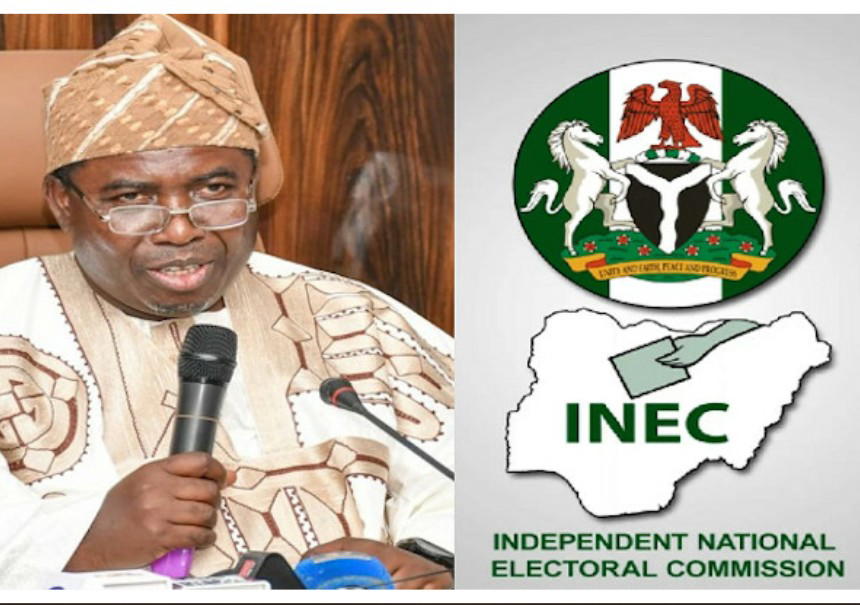
The Independent National Electoral Commission (INEC) has issued a warning to politicians and their supporters against the use of the slogan “rig and die” in the lead-up to the 2027 general elections.
INEC National Commissioner and Chairman of the Information and Voter Education Committee, Mohammed Haruna, made the announcement on Monday in Abuja during a zonal forum with media stakeholders. This forum included participants from the Nigeria Union of Journalists (NUJ), the Nigerian Institute of Social Media Analysts (NISMA), the Newspaper Proprietors Association of Nigeria (NPAN), and various media executives.
Haruna, represented by Wilfred Ifogah, the Deputy Director of Information and Publicity, emphasized that such rhetoric could endanger the lives of electoral officials and voters. He addressed the forum on the theme “Ethical and Professional Standards in Election Reporting Ahead of the 2027 General Election,” underscoring the dangers of equating electoral offences with death, which could incite mob violence at polling stations.


“The phrase ‘rig and die’ is now widely repeated. Regardless of its intent, linking an electoral offence to death is perilous,” Haruna stated. He noted that the individuals most susceptible at polling units are not the powerful politicians, but rather ordinary citizens serving as presiding officers, assistant presiding officers, collation officers, and various ad hoc staff, alongside voters, party agents, and observers.
He cautioned that a tense atmosphere could lead a crowd to misinterpret delays, technical issues, or rumors as rigging, resulting in irreparable consequences. Haruna reminded attendees that rigging is a criminal offense, with penalties outlined in the Electoral Act of 2026. He urged the use of lawful remedies such as vigilant observation, transparent results on the INEC Result Viewing (IReV) portal, and formal complaints to the commission or law enforcement agencies as appropriate.
“Section 33 of the Constitution guarantees the right to life, and no one should face violence based on mere suspicion,” he added.
Haruna called on political leaders to avoid violent rhetoric and urged journalists to refrain from amplifying threats through headlines or trending statements. “Threats of violence do not constitute robust political debate; they are offenses, and security agencies must respond accordingly,” he remarked. He also assured that journalists must not face intimidation while performing their duties, emphasizing the crucial link between a free press and the integrity of the electoral process.
The INEC official reiterated the commission’s commitment to accountability, stating that any staff member or ad hoc official found compromising the election process would face legal consequences. He highlighted provisions in the Electoral Act regarding penalties for election-related offenses such as result manipulation and vote buying.
Haruna also addressed misinformation circulating on social media regarding voting without Permanent Voter Cards (PVCs), affirming that the “No PVC, no voting” rule remains strictly enforced by law. He described misleading claims suggesting that the Bimodal Voter Accreditation System (BVAS) negates the need for PVCs as deliberate falsehoods that could disenfranchise voters.
“Section 47(1) of the Electoral Act 2026 requires anyone intending to vote to present a valid PVC at their polling station,” he stated. “The BVAS verifies the card and the individual’s biometrics, but does not replace the card. Without a PVC, there can be no accreditation and hence no ballot paper.”
Haruna advised voters to collect their cards promptly and encouraged them to reach out to INEC for clarification if needed. He further urged media professionals and social media analysts to combat the spread of fake news, deepfakes, and content generated by artificial intelligence, noting that creating or sharing such content is an offense under the Cybercrime Act.
Reflecting on past elections, he recounted how false claims and AI-generated content created confusion during the Osun governorship election, diverting INEC’s attention from its core responsibilities.
He encouraged journalists and voters to verify claims directly with INEC through its Citizens Contact Centre, website, or official social media handles prior to publication.
In closing, Haruna outlined three priorities for the media: to promote voter education, particularly regarding PVC collection, to investigate and expose vote buying, and to collaborate in countering disinformation and threats.
He also announced a nationwide mock accreditation and voting exercise to be conducted by INEC on November 28, involving two polling units per Registration Area across all 36 states and the Federal Capital Territory. This exercise aims to test the BVAS and the process of result uploads to the INEC Result Viewing portal ahead of the presidential and national assembly elections scheduled for January 16, 2027.