Vaccines Prevent Around 1.8m Deaths in Africa, WHO Reveals
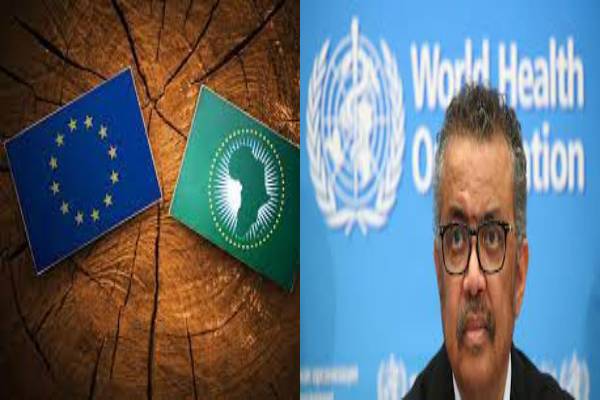
WHO Reports Vaccines Prevent 1.8 Million Deaths Annually in Africa
Professor Mohamed Yakub Janabi, the Regional Director for Africa at the World Health Organization (WHO), announced that vaccines are responsible for preventing approximately 1.8 million deaths each year on the continent. He underscored the importance of these saved lives, emphasizing their significance for families.
Janabi made these remarks during African Vaccination Week, celebrated from April 24 to April 30, under the theme “For Every Generation, Vaccines Work.” He highlighted that accessible clinics should focus on providing care rather than battling outbreaks, allowing communities to engage in work, farming, and trade without disruption.


“This year’s commemoration emphasizes the protection that immunization offers throughout the life course. Since 2000, around 500 million African children have been safeguarded through routine vaccinations,” Janabi said. He noted that immunization benefits extend beyond childhood, mentioning that HPV vaccines protect adolescent girls from cervical cancer and maternal vaccines benefit both mothers and newborns.
The professor pointed to advancements across Africa that enhance vaccination efforts, including the use of digital records for tracking vaccination schedules and solar-powered refrigerators to keep vaccines safe in remote clinics. He also reported the introduction of malaria vaccines in 25 countries as a significant new tool against the disease.
In December 2025, the African Regional Verification Commission confirmed that Cabo Verde, Mauritius, and Seychelles had eliminated measles and rubella, marking them as the first countries in the WHO African Region to achieve this milestone. Janabi expressed optimism, stating that a measles-free Africa is becoming increasingly attainable through sustained vaccine coverage and robust surveillance.
He noted that the Big Catch-Up initiative successfully reached nearly 8.75 million children who had missed routine vaccinations, with diphtheria, tetanus, and whooping cough coverage returning to pre-pandemic levels. Since 1988, polio vaccination initiatives have reportedly averted an estimated 1.57 million deaths and prevented paralysis in over 20 million individuals.
In regions such as the Lake Chad Basin and the Horn of Africa, nearly 200 million children received protection last year thanks to collaboration among governments, communities, and frontline vaccinators. However, Janabi acknowledged significant challenges, including the fact that approximately 6.7 million children in the region have not received a single routine vaccine, while another 9.5 million remain under-immunized.
He cautioned that ongoing measles outbreaks and the risk of vaccine-derived poliovirus transmission are reminders that progress can be reversed. At this midpoint of the Immunization Agenda 2030, he stressed the need for renewed commitment to its goals, particularly as external funding becomes less reliable.
Janabi urged the continent to enhance domestic resource mobilization and strengthen national ownership of immunization programs, positioning immunization as a crucial component of primary health care and a foundation for universal health coverage. He highlighted that every dollar spent on childhood immunization in Africa yields an estimated forty-four dollars in economic benefits.
Recently, the WHO Regional Office for Africa launched a collaborative report with Gavi, titled Towards Immunisation Agenda 2030 Targets: Two Decades of Immunisation Efforts in the WHO African Region, which recognizes achievements, identifies gaps, and establishes baselines for the future.
In conclusion, Janabi called upon Member States, partners, communities, and stakeholders to collaborate so that the benefits of immunization reach every individual, at every stage of life.


