Atiku rejects Tinubu’s economic scorecard, cites unpaid wages
By Omeiza Ajayi
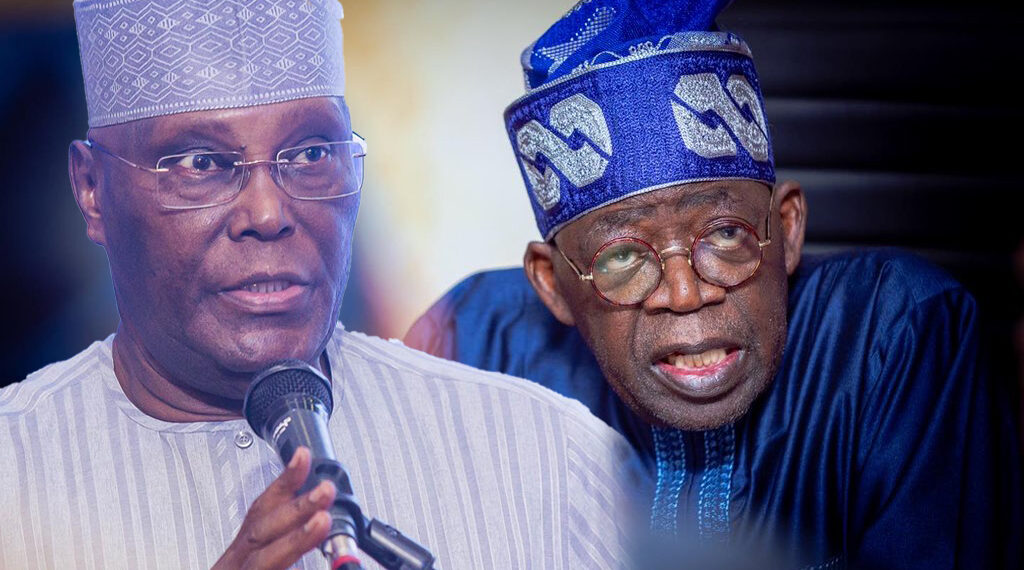
ABUJA — Atiku Abubakar, the presidential candidate for the African Democratic Congress (ADC), has firmly rejected the recent defense of President Bola Tinubu’s economic policies put forth by Taiwo Oyedele, Chairman of the Presidential Committee on Fiscal Policy and Tax Reforms. Abubakar characterized Oyedele’s remarks as a “desperate attempt at revisionism.”
In a statement issued Sunday through his Senior Special Assistant on Public Communication, Phrank Shaibu, Abubakar expressed that the government’s assertions regarding public debt, subsidy removal, and workers’ welfare collapse under scrutiny of available data.
“Which salary increase is the government talking about?” Abubakar questioned. He pointed out that the Federal Government has yet to fully implement the new minimum wage, noting that the 40 percent peculiar allowance associated with this wage adjustment remains unpaid, despite directives for it to take effect from May 1, 2026. He emphasized that these concerns are not mere opposition allegations but reflect the grievances of organized labor.
Addressing the country’s public debt, Abubakar cited estimates from the Central Bank of Nigeria (CBN), reporting that the Federal Government’s debt to the bank was approximately ₦26.9 trillion when Tinubu took office in May 2023, rising to over ₦40.38 trillion by May 2026.
He referenced comments from CBN Governor Olayemi Cardoso, indicating that the apex bank’s credit to the Federal Government escalated from ₦22.99 trillion in May 2025 to ₦40.38 trillion in May 2026. This represents an increase of ₦17.39 trillion, or 77.6 percent, within a single year.
“This administration has not reduced its indebtedness to the CBN; it has merely reclassified the debt by converting Ways and Means advances into Treasury Bills and Bonds while accruing new liabilities,” Abubakar argued. “That is debt restructuring—not debt repayment.”
Additionally, Abubakar contested the government’s claim that savings from subsidy removal are funding the Nigerian Education Loan Fund (NELFUND). He highlighted a prior statement from the fund’s Chief Executive Officer, who disclosed that the scheme had received a ₦50 billion injection from funds recovered by the Economic and Financial Crimes Commission (EFCC).
“If that is the case, why is the government now presenting subsidy savings as the source?” he asked.
Abubakar further criticized attempts to attribute rising debt servicing costs solely to high interest rates, noting the government’s borrowing patterns under the current Monetary Policy Rate regime. He remarked that the government’s excessive borrowing has crowded out productive enterprises, driving debt servicing to unsustainable levels. He described attempts to blame interest rates as an acknowledgment of policy failure.
The former Vice President pointed out various economic challenges facing Nigerians, including rising food prices, inflation, business closures, unemployment, naira depreciation, and increasing poverty. He urged government officials to move past media spin and confront the reality of the nation’s economic situation with sincerity and accountability.