31 APC Govs vs wike: Tinubu faces difficult options
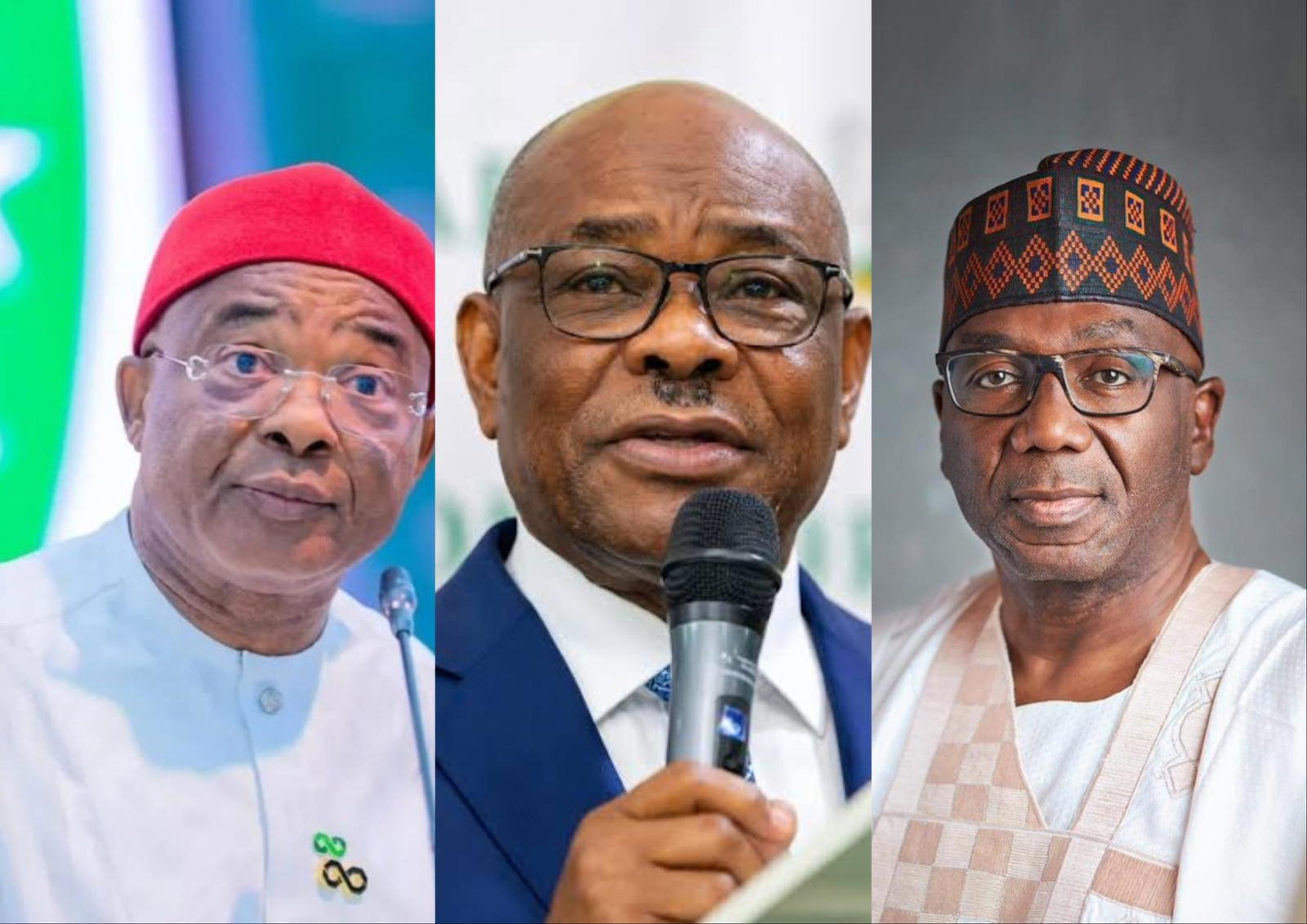
Wike Challenges APC Governors Amid Tensions in Party Ahead of 2027 Elections
By Omeiza Ajayi
Tensions have escalated within the All Progressives Congress (APC) as the political landscape shifts ahead of the 2027 elections. Minister of the Federal Capital Territory, Nyesom Wike, has openly clashed with a group of governors affiliated with the party, raising critical questions regarding President Bola Tinubu’s strategies to maintain party unity.

Positions Established at Governors’ Meeting
The dispute came to the forefront following a closed-door session of the Progressive Governors Forum (PGF) in Abuja led by Imo State Governor Hope Uzodimma last Monday. Reports from the meeting suggest that the governors agreed to support only official APC candidates and to reject any candidates stemming from an external coalition, a move motivated by concerns that backing outside contenders could weaken the party’s standing and confuse voters.
Governor Uzodimma emphasized that such arrangements could jeopardize loyalty within the party, as well as Tinubu’s aspirations for a second term.
This caution is informed by historical precedents; during the existence of the Alliance for Democracy, a similar alliance led to significant losses for party governors, with only Tinubu managing to retain his position in Lagos State.
Wike’s Defiance and Directline to the Presidency
In response, Wike displayed defiance, denying ever seeking the governors’ endorsement for his “Rainbow Coalition.” He described the coalition as a movement designed to rally support for Tinubu’s re-election by uniting politicians from rival parties without requiring their formal defection.
“I have never, one day, gone to the APC Forum for an alliance,” Wike stated during an appearance on Arise Television. He further criticized the governors, labeling them “politically lazy” and accusing them of lacking a coherent strategy to secure votes for the president.
Wike has sought to distance himself from the influence of the governors by asserting his direct communications with Tinubu. “There is nothing that I do that I don’t tell Mr. President. I am not answerable to APC governors,” he remarked.
Origins of the Rift
Political analysts suggest that the friction between Wike and the governors was ignited by his appointment as FCT minister, which disrupted established power dynamics among Tinubu’s southern allies. The former South-East spokesman for Tinubu, Denge Josef Onoh, noted that Wike’s historical role in the G5—a coalition of dissenting PDP governors—previously benefitted Tinubu by fracturing the opposition.
Recent developments concerning Wike’s Rainbow Coalition have further amplified the tensions as he aimed to include political figures from outside the APC, a stance that the governors believe threatens their electoral strength.
Implications for Tinubu’s Re-election Bid
With President Tinubu preparing to seek re-election, the public discord between Wike and the governors poses a significant risk. A spokesperson for the APC’s Presidential Campaign Council (PCC), Ima Niboro, has cautioned that unresolved conflicts could undermine the party’s prospects in the upcoming election.
Tinubu finds himself in a precarious position, balancing the loyalty of the governors, who control vital party structures and local support networks, against Wike’s ability to expand the president’s appeal to a broader constituency.
The President’s Next Steps
Thus far, the president has remained publicly silent on the matter, prompting speculation regarding his potential intervention. Statements from party members highlight the need for Tinubu to utilize his political acumen to address the growing rift. While Wike insists he has kept the president informed of his political maneuvers, the lack of a decisive pronouncement from Tinubu has resulted in concerns about the coalition’s impact on party unity.
Several former lawmakers have expressed support for Wike, claiming that his contributions have significantly aided the party, while some governors are hopeful that Tinubu will prioritize party discipline over allegiance to Wike as a single minister.
Potential Outcomes of Party Disunity
Should Tinubu choose to side with the governors, it could alienate Wike, who is integral to his strategy, potentially destabilizing his support in the South. Conversely, backing Wike could diminish the authority of the PGF, prompting governors to pull back their efforts for the APC ahead of the elections.
A middle-ground approach where Wike’s coalition is recognized but constrained could allow both parties to maintain their core interests while working toward a common goal. However, the absence of prompt action could exacerbate divisions within the APC, leaving it vulnerable to exploitation by opposition forces as the election approaches.
The stakes are high as the APC navigates this internal strife, which could ultimately affect their campaign efforts in 2027. The responsibility now rests with President Tinubu to broker a resolution that brings harmony to the party.