Tinubu building political power, not national unity – Makinde

Oyo Governor Seyi Makinde Critiques President Bola Tinubu’s Administration Ahead of 2027 Election
OYO STATE, Nigeria — Oyo State Governor Seyi Makinde, a presidential candidate for the Allied Peoples Movement (APM), has publicly criticized President Bola Tinubu, accusing him of prioritizing political alliances over national unity. Makinde expressed his disappointment with Tinubu’s administration, stating that it has not fulfilled the governance expectations he had when he supported Tinubu in the 2023 presidential election.
In a statement released on his RESET Nigeria website on Thursday, Makinde explained that his initial support for Tinubu stemmed from a belief that the president would unify Nigerians and lead a competent government. However, he has since reassessed Tinubu’s leadership, prompting him to challenge the president in the 2027 presidential election.

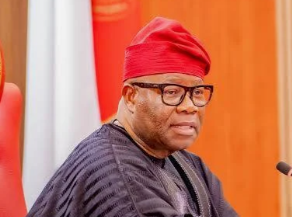
“I supported President Bola Ahmed Tinubu in 2023. Today, I am running against him in the 2027 presidential election,” Makinde stated. He acknowledged that some may wonder about the change in his stance, but he clarified that his decision is not based on personal disagreements or ambitions. Instead, he emphasized the importance of Nigeria’s future and the opportunities available to its citizens.
Makinde highlighted several concerns regarding the Tinubu administration, citing issues such as economic stability without development, governance characterized by excuses, political power pursuits that undermine national unity, and economic reforms lacking sufficient protections for vulnerable citizens.
While recognizing improvements in some macroeconomic indicators, Makinde argued that these gains have not translated into tangible benefits for ordinary Nigerians. “Government revenues and external reserves mean little to ordinary Nigerians if those gains do not translate into productive businesses, jobs, better incomes, and improved living conditions,” he asserted. He also disagreed with the perspective that economic stabilization should precede development, advocating for simultaneous efforts in both areas.
Furthermore, Makinde criticized the administration’s tendency to govern by excuses. He expressed concern that over three years into Tinubu’s tenure, citizens continue to hear justifications related to inherited challenges—such as poverty, insecurity, and electricity shortages—rather than witnessing significant progress in addressing these issues.
In addition, he underscored the importance of a robust opposition, arguing that its decline poses a threat to Nigeria’s democracy. “I believed President Tinubu’s ability to build political alliances would result in a government that unites capable Nigerians around a shared national interest,” he said. “Instead, I have come to believe that his political alliances serve his political objectives more than the national interest.”
Makinde supported the need for reforms to the petrol subsidy and foreign exchange systems but criticized the administration for not implementing adequate protective measures for vulnerable Nigerians prior to these policy changes. He noted that many citizens were already struggling and faced increased hardship due to the lack of sufficient cushioning measures.
Looking ahead, Makinde stated that the Tinubu administration should have better prepared the public for the removal of the petrol subsidy. He advocated for the convening of the National Economic Council (NEC) to establish a plan for mitigating the subsidy’s impact, recalling that Tinubu himself opposed the sudden subsidy removal by former President Goodluck Jonathan in 2012.
Makinde urged Nigerians to maintain hope and demanded that any future leaders provide clear plans for their governance. His presidential campaign, centered on the Reset Nigeria Agenda, underscores his belief that a different approach to governance in a four-year term can yield significantly better results for the nation.