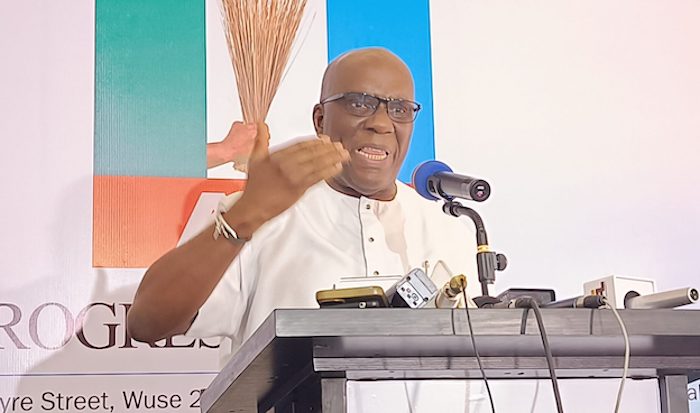
ADC: Rival camps dig in as survival hangs on Supreme Court verdict
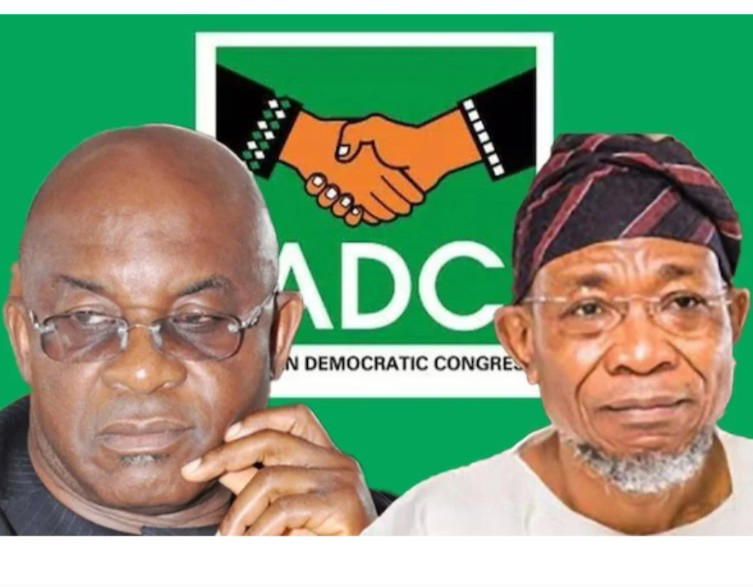
Leadership Crisis in African Democratic Congress Escalates Amid Legal Standoff
By Luminous Jannamike
The African Democratic Congress (ADC) finds itself in a deepening leadership crisis as three rival factions present conflicting constitutional claims, leaving the party without a recognized national leadership.



The dispute, which originated from an internal transition disagreement in mid-2025, has escalated to involve the courts and the Independent National Electoral Commission (INEC). Concerns are mounting over the ADC’s viability as an opposition party in the lead-up to the 2027 general elections.
On April 1, 2026, INEC withdrew its recognition from both the factions led by the Mark and Gombe camps, citing a Court of Appeal order mandating the maintenance of the status quo. This decision has effectively paralyzed the party’s leadership structure, as INEC will not engage with any faction until a final judicial resolution is reached. Analysts warn that this situation could have significant consequences for the ADC’s ability to participate in the upcoming elections.
Competing Claims
The Mark-led faction asserts that it has operated within legal frameworks, referencing a series of National Executive Committee (NEC) decisions from 2025, including the ratification of a caretaker leadership on July 29. They argue that Article 13 of the ADC constitution empowers the NEC to manage the party and establish interim structures as needed. They also cite Articles 17(3) and 17(4) to justify the transition process, claiming that vacancies were filled appropriately.
Additionally, the Mark faction contends that NEC resolutions waived the two-year membership requirement under Article 9(4) to facilitate coalition-building efforts. They emphasize their earlier recognition by INEC in September 2025, as well as their conduct of congresses leading up to the April 14, 2026 National Convention.
In contrast, the Gombe faction maintains that the process leading to the Mark group’s leadership is unconstitutional. They argue that the appointments violated eligibility rules and proper membership registration protocols. The Gombe camp disputes the authority of former National Chairman Ralph Nwosu, claiming he improperly handed over leadership outside constitutional guidelines.
Further, the Gombe faction insists no valid amendments were made to the constitution, as outlined in Article 23, which mandates amendments through a National Convention with appropriate notice and a two-thirds majority. They claim that as Deputy National Chairman, Gombe should automatically serve as Acting National Chairman following the leadership void, pointing to a Court of Appeal order to uphold the status quo.
Emergence of a Third Faction
A separate bloc aligned with Kachikwu has rejected the claims of both the Mark and Gombe factions, labeling them as legally flawed. This group, supported by approximately 25 state chairmen, argues that neither faction has adhered to constitutional requirements, particularly those related to eligibility and membership. They assert that significant decisions, like forming caretaker structures, were not properly ratified by a constituted NEC.
This faction is pushing for an interim leadership structure aimed at restoring constitutional governance within the party. They have aligned with INEC’s decision to de-recognize the rival factions, declaring any actions taken outside judicial authority, including the recent convention, as null and void.
ADC in Legal Limbo
Currently, the ADC remains in a state of uncertainty as INECwithholds recognition and the courts deliberate. The Federal High Court is addressing the lawsuit initiated by the Gombe faction but has suspended proceedings pending a Supreme Court verdict on an appeal from the Mark faction. The apex court’s interpretation of the lower court’s directive will be pivotal in determining the party’s direction.
As it stands, the ADC is unable to conduct valid primaries, submit candidates, or adhere to electoral timelines without recognized leadership. The prolonged internal conflict is complicating the party’s potential role in opposition coalitions as the 2027 elections approach.
The ADC, seen as a possible platform for coalition-building among various factions, including the Peoples Democratic Party and smaller parties such as the People’s Redemption Party and the Social Democratic Party, risks losing strategic ground to the ruling All Progressives Congress if the leadership issues remain unresolved.
With three competing factions each claiming legitimacy but lacking formal recognition, the ADC’s immediate future hinges on the outcome of legal proceedings that could either unite the party or lead to its further fragmentation.