Senate makes U-turn on 8-year eligibility for presidency contest
Senate Reverses Decision on Eligibility for Leadership Positions
By Henry Umoru, ABUJA
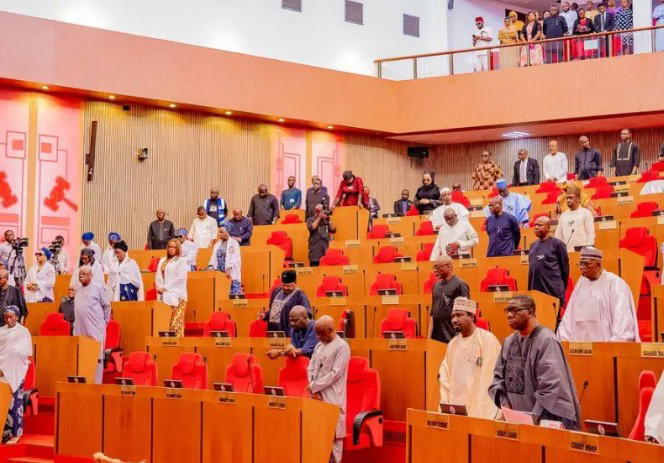
The Nigerian Senate has reversed its earlier decision that restricted first-time senators from contesting for presiding offices, effectively reopening the race for Senate President and Deputy Senate President ahead of the 2027 elections.



On Tuesday, following an extended executive session, the Senate had amended its Standing Orders to implement stricter criteria for leadership positions, primarily designating the contest for Senate President to returning lawmakers. This represented a significant shift within the body, as it sought to limit eligibility to more experienced members.
Under the now-rescinded amendment, leadership roles were to be prioritized in a hierarchy: starting with former Senate Presidents and Deputy Senate Presidents, followed by former Principal Officers, senators who have served at least one full term, and representatives transitioning from the House of Representatives. First-time senators would only be considered if no higher-ranking candidates were available.
Senate Leader Opeyemi Bamidele, representing the All Progressives Congress from Ekiti Central, sponsored the motion for the reversal, which was presided over by Deputy Senate President Jubril Barau on Thursday.
Bamidele emphasized the importance of the change, stating that the leadership contest for the 11th National Assembly is now open to all elected senators, regardless of their tenure. He noted that this shift represents a more competitive and inclusive approach to selecting the Senate leadership, moving away from strict tenure requirements.
The motion, titled “Recession and Re-Committal of Order 2(2) and Order 3(1) of the Senate Standing Orders, 2023, as amended,” highlighted concerns regarding potential constitutional inconsistencies stemming from the original amendments adopted on May 5, 2026. Bamidele pointed out the need for the Senate’s Standing Orders to align with the constitutional provisions of Nigeria, particularly Section 52 of the 1999 Constitution.
The Senate acknowledged its authority to revisit and amend any previously decided matters to maintain the integrity of its legislative framework.
Further details are expected to emerge regarding the implications of this decision and the future leadership landscape of the Senate.