Nigeria loses 50% of food to waste as stakeholders push large-scale farming

NIGERIA FACES SIGNIFICANT FOOD WASTE CHALLENGE, EXPERTS CALL FOR COMMERCIAL FARMING REVOLUTION
By Jimoh Babatunde
LAGOS — Nigeria is reportedly losing up to 50% of the food produced in Lagos before it reaches consumers, raising alarms among stakeholders who advocate for large-scale commercial farming to tackle the country’s escalating food crisis.
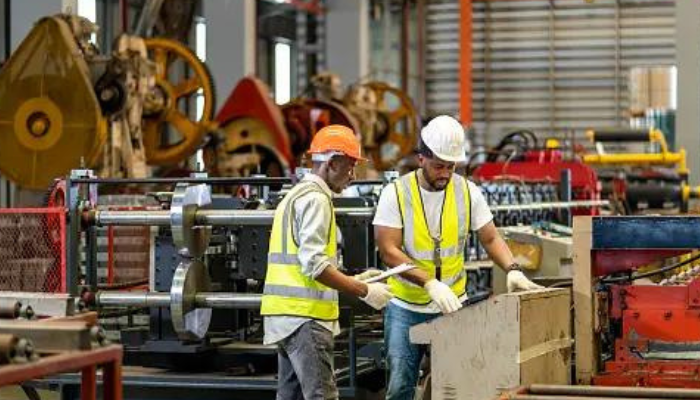

This concern was highlighted during the launch of a corporate farming initiative aimed at enhancing agricultural production and mitigating food losses across Nigeria’s supply chain.
At the unveiling event, representatives from government, agribusiness, banking, and farming sectors emphasized the necessity for Nigeria to shift from its fragmented smallholder farming model to a more coordinated commercial farming approach. This transition, they believe, is crucial for boosting productivity and ensuring food security.
Origin Tech Group introduced its Corporate Farm Model, which aims to facilitate large-scale farming through structured financing, effective farm management, and assured market access for agricultural products.
Prince Samuel, Executive Chairman of Origin Tech Group, stated that inefficiencies within Nigeria’s agricultural supply chain contribute significantly to food losses. “About 50% of the food produced in Lagos never reaches consumers due to these inefficiencies,” he said.
Samuel further explained that the corporate farm model was designed to address risks that have historically deterred investment in agriculture. Financial institutions, he noted, have often faced losses by financing poorly coordinated agricultural initiatives lacking technical support and guaranteed market access.
The initiative allows investors to engage in farming on a minimum of 1,000 hectares, with investors contributing 20% to 30% equity, while the remainder is sourced from financial institutions and Origin Tech.
Additionally, the program will offer farmers technical assistance for two planting cycles, along with advisory services for up to five cycles.
Leo Edwards, Chief Operating Officer of Origin Automobile Works, pointed out that Nigeria’s low level of mechanized farming poses a significant hurdle. He cited data from the Food and Agriculture Organization (FAO), noting that the global benchmark for mechanization is 1.5 horsepower per hectare, while Nigeria currently operates at just 0.0027 horsepower per hectare.
Lagos State Commissioner for Agriculture and Food Systems, Abisola Olusanya, also addressed the issue, emphasizing the need for Nigeria’s agricultural model to adapt in order to reduce existing food losses and supply shortages.