Education, medical tourism drive foreign travel spending to $6bn
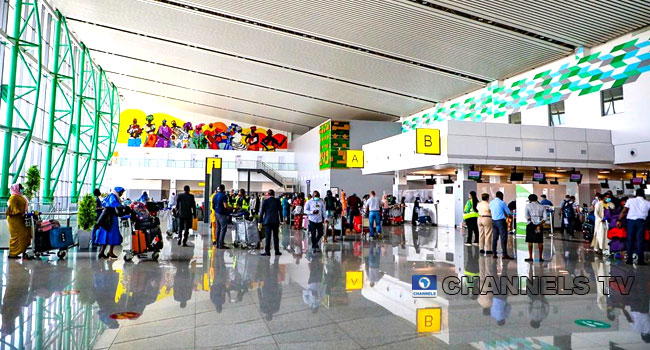
Nigerians Spend Nearly $6 Billion on International Travel in 2025
By Babajide Komolafe, Economy Editor, and Dickson Omobola
Nigerians spent approximately $5.996 billion on international airline tickets in 2025, marking a 32% increase from the previous year, driven by growth in education-related travel and a rise in international business engagements.


Highlights of this spending include significant investments in medical tourism and personal travel. Industry experts have noted that this surge reflects underlying structural weaknesses in the Nigerian economy, particularly in education, healthcare, and tourism. They warn that without urgent reforms, the country risks losing substantial foreign exchange to overseas medical, educational, and tourism services.
Experts urge the government to invest in infrastructure, enhance security, support local airlines, and implement comprehensive reforms across the healthcare and tourism sectors to mitigate the pressure on foreign travel spending.
Data from the Central Bank of Nigeria indicates that total foreign travel expenditure increased from $4.544 billion in 2024 to $5.996 billion in 2025.
Quarterly analysis reveals that the growth in spending was largely concentrated in the first three quarters of the year, with a 33.2% increase in Q2 and a 7.0% rise in Q3, before a significant decline of 31.6% in Q4. In the first quarter of 2025, spending reached $1.267 billion, a 20.2% increase from the same period in 2024.
Education-related travel remained the largest component of foreign expenditure, with Nigerians spending $2.845 billion in 2025, up 14.5% from $2.484 billion in 2024.
In the first quarter, education travel expenditures amounted to $592.71 million, increasing 6.0% year-over-year. This figure rose to $800.16 million in Q2 and peaked at $880.17 million in Q3 before dropping to $572.11 million in Q4, reflecting a 13.6% decrease from the prior year.
Spending on business travel saw a substantial increase, reaching $231.75 million in Q1 2025, compared to $77.33 million in the same quarter of 2024. The second quarter recorded an increase of 403.1%, while in Q3, business travel spending surged 924%. A year-over-year increase of 369.5% was noted in Q4.
Medical travel expenditures rose 6.5% to $684.72 million in 2025, reflecting increases across the first three quarters before declining in Q4.
Personal travel spending for tourism and other purposes increased by 31.3% to $1.62 billion in 2025, with notable quarterly growth.
Industry experts highlighted that foreign airlines have been the major beneficiaries of this uptick in overseas travel. Olumide Ohunayo, Director of Research at Zenith Travels and Consult Ltd, noted that the majority of international flights are operated by foreign airlines, emphasizing the need for a robust national carrier.
Ohunayo attributed the rise in education-related travel to the declining quality of local institutions. He pointed out that many private institutions are now pricing tuition fees comparably to foreign universities.
Chris Aligbe, CEO of Belujane Konzult, echoed these concerns, citing a decline in educational standards and the consequent pressure on foreign exchange. He suggested that infrastructure improvements and better security are crucial to curbing the rise of medical tourism.
Regarding domestic tourism, Aligbe expressed that insecurity and a lack of clear policy direction are key obstacles to growth. He noted that higher fares by domestic airlines have shifted demand towards international routes, especially during peak travel periods.
This report underscores the increasing financial burden of foreign travel on Nigerians, calling for immediate attention to underlying economic challenges.