Ekiti 2026: 16 days to go, Oyebanji dominates, opposition struggles for relevance
Ekiti State Prepares for Governorship Election as Political Tensions Rise
By Rotimi Ojomoyela
As Ekiti State approaches the June 20, 2026, governorship election, the political climate is becoming increasingly charged, despite efforts from stakeholders to maintain peace.
Approximately 1,059,360 registered voters are anticipated to participate at 2,445 polling units across 177 wards in the state’s 16 local government areas.
The election was initially framed as a competitive three-horse race, influenced by power dynamics, zoning discussions, and party structures. Recent developments indicate that the ruling All Progressives Congress (APC) has gained a substantial lead, leaving opposition parties struggling to maintain relevance.
Tensions Persist Despite Peace Accord
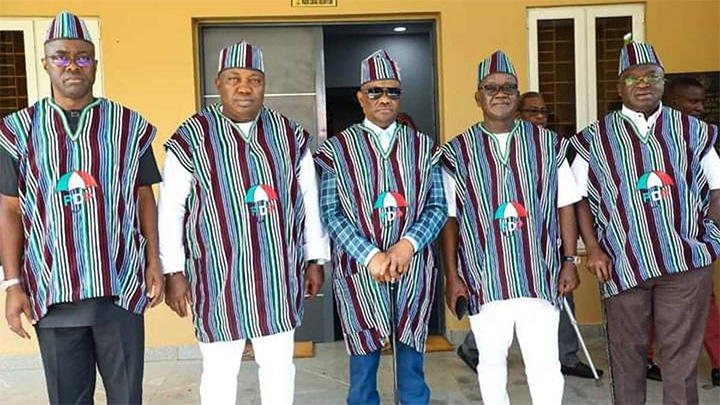
The relative tranquility in the political landscape has been disrupted by allegations and counter-allegations among political factions. The Peoples Democratic Party (PDP) has accused the APC of engaging the Nigeria Police Force to intimidate opposition members, notably through the use of Form K, a legal instrument that allows for the detention of suspects pending investigation or trial.
Similarly, the African Democratic Congress (ADC) expressed concerns following the arrest and detention of its House of Assembly candidate, Ayodele Babatola. These accusations emerged shortly after political leaders convened in Ado-Ekiti to sign a peace accord promoted by the National Peace Committee, led by former Head of State General Abdulsalami Abubakar, reaffirming their commitment to peaceful electoral practices.
Major Candidates and Their Prospects
Governor Biodun Oyebanji, hailing from Ikogosi-Ekiti in the Ekiti Central Senatorial District, is positioned as the frontrunner. An academic and seasoned public servant, Oyebanji has held various roles since the state’s formation in 1996, including Chief of Staff and Secretary to the State Government. After winning the governorship election in 2022, he is now seeking re-election.
In addition to the advantages of incumbency, Oyebanji has secured support from key political groups, including alliances with former governors. His administration’s positive rapport with organized labor has resulted in endorsements that strengthen his campaign.
Opposition Challenges
Dr. Oluwole Oluyede, representing the PDP, is a medical doctor and entrepreneur from Ikere-Ekiti in the Ekiti South Senatorial District. After navigating various political parties, he emerged as the PDP candidate following a competitive primary process. Although his political alliances have raised questions about consistency, proponents argue that he could benefit from calls for power rotation to the South—an area yet to produce a governor since the state’s formation.
Ambassador Dare Bejide, the ADC candidate and a former Secretary to the State Government, hopes to leverage his extensive experience and recognition to challenge the APC. Bejide aims to galvanize support from disaffected voters and build a broader coalition among opposition parties.
Zoning Discussions Remain Central
The debate surrounding power rotation to Ekiti South is a prominent issue in campaign discussions. Advocates argue it is time for the region to govern, following the leadership of candidates from Ekiti Central and Ekiti North. While this argument may bolster the prospects of both Oluyede and Bejide, analysts caution that the entrenched advantage of the APC and Oyebanji’s political machinery may still prevail.
Looking Ahead
With the election date approaching, the APC maintains a commanding position in the political arena, while the PDP and ADC must convert public discontent and coalition-building efforts into electoral success. The critical question remains: can the opposition unify and garner sufficient support to challenge Oyebanji’s re-election, or will he be the first governor in Ekiti’s history to secure a consecutive term?
For further updates, visit Vanguard News.