Tinubu’s infrastructure, human capital investments will drive $1tn economy — APC chairman
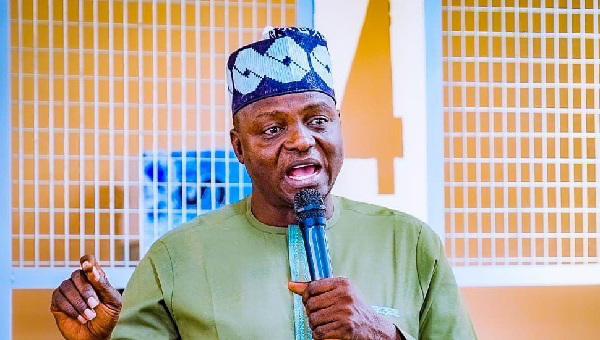
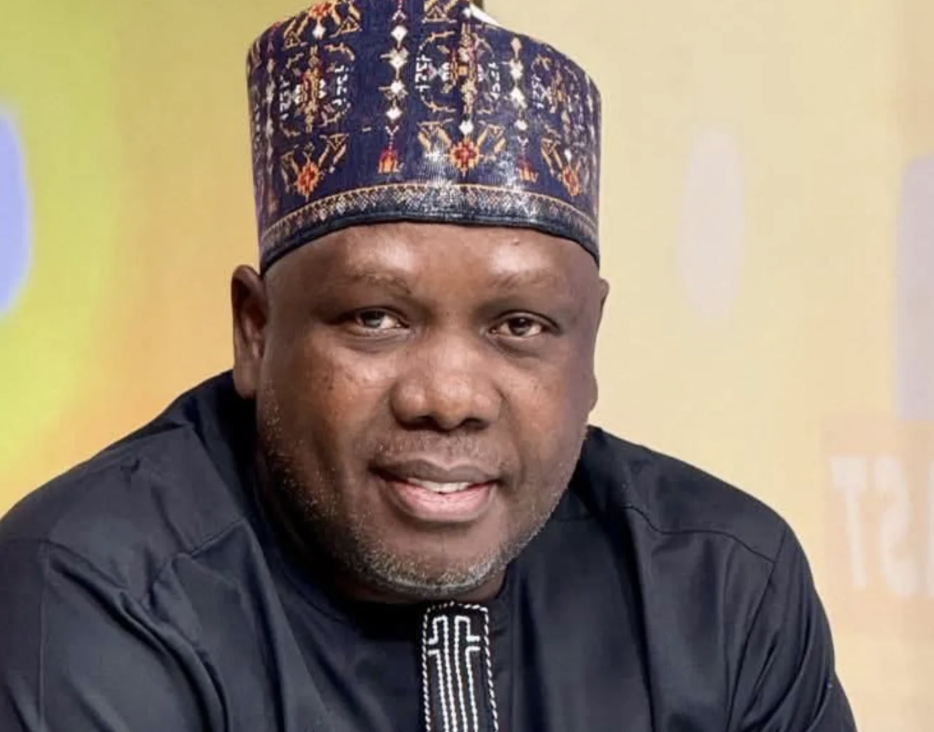
ABUJA — Prof. Nentawe Goshwe Yilwatda, the National Chairman of the All Progressives Congress (APC), affirmed that President Bola Tinubu’s administration is making significant investments in infrastructure and human capital to reach its goal of establishing a $1 trillion economy.
Yilwatda made these remarks during a meeting with the Governing Council of the Federal University of Health Sciences, Otukpo, led by Pro-Chancellor Prof. Muhammad Audu, at the APC National Secretariat in Abuja.
In a statement issued Thursday by his Special Adviser on Media and Information Strategy, Abimbola Tooki, Yilwatda highlighted that ongoing projects in roads, bridges, railways, deep seaports, and education are intended to enhance productivity, attract investments, create jobs, and foster sustainable economic growth.

He emphasized the administration’s strategic approach to infrastructure development, noting that efficient transportation networks are vital for long-term economic expansion.
Yilwatda outlined plans for five major deep seaports across Nigeria, including Badagry Deep Sea Port in Lagos, Olokola Deep Sea Port in the Ondo-Ogun area, Ibom Deep Sea Port in Akwa Ibom, Bakassi Deep Sea Port in Cross River, and Bonny Deep Sea Port in Rivers.
“These projects are integral to a comprehensive economic strategy. We are constructing the infrastructure necessary to support the one-trillion-dollar economy envisioned by President Tinubu,” he stated.
Additionally, Yilwatda mentioned the ongoing construction of coastal highways and interconnected road networks designed to facilitate the movement of goods and services.
“We are building seven coastal roads to link the five deep seaports. The government is committed to ensuring that our transportation infrastructure supports trade and investment throughout the nation,” he said.
He also pointed out the significance of a railway project connecting Nigeria to Maradi in Niger Republic, which aims to enhance regional trade and Nigeria’s position as a logistics hub.
The railway initiative is expected to improve the movement of people and freight while increasing cargo capacity at Nigerian ports by providing landlocked Niger easier access to maritime services.
Currently, Yilwatda reported that there are 81 federal road projects underway in the North-Central zone, along with over 260 road and bridge projects throughout the six geopolitical zones of Nigeria. The Federal Government recently approved 27 major road projects worth approximately N3.9 trillion across 15 states to enhance connectivity and stimulate commerce.
“Our goal is to improve transportation across the country, allowing for quicker travel. Better roads lead to more efficient commerce, enhanced access to markets, healthcare, and education, and greater investment opportunities,” he remarked.
On economic initiatives, Yilwatda indicated that tax reforms are focused on fairness, ensuring lower-income earners pay reduced taxes while higher-income earners contribute more proportionally. He also noted recent foreign exchange reforms aimed at improving market stability and alleviating issues related to the parallel market.
Yilwatda proclaimed that Nigeria’s economic indicators show positive trends, citing an approximate four percent growth in Gross Domestic Product (GDP) and increased investor confidence.
He mentioned significant investment commitments, including a reported $20 billion from Shell, which is anticipated to generate jobs and stimulate various sectors of the economy.
The chairman stressed that the administration’s economic reforms are paralleled by investments in education and healthcare. He praised the Governing Council of the Federal University of Health Sciences, Otukpo for training healthcare professionals and described the institution as a crucial investment in Nigeria’s future.
Regarding the welfare of university lecturers, he expressed approval of recent governmental measures aimed at enhancing their compensation, which he believes will strengthen the education sector and reduce disputes.
Earlier, Prof. Muhammad Audu appealed for assistance in facilitating access to President Tinubu and the Minister of the Federal Capital Territory, Nyesom Wike, to present development plans and seek support for critical infrastructure projects. Yilwatda assured the delegation that the request would receive careful consideration, reaffirming the administration’s commitment to human capital development through institutional support.