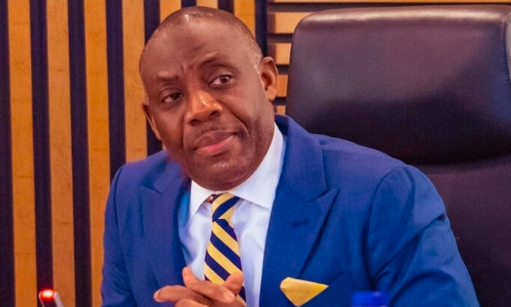
Peter Obi’s Bayelsa visit triggers political realignment as Ijaw leaders demand devt, unity

By Samuel Oyadongha, Yenagoa
The political landscape in Bayelsa State is shifting following the visit of Peter Obi, the presidential candidate of the Nigeria Democratic Congress (NDC), last week. Political stakeholders indicate that this visit has added a significant new dimension to the state’s evolving political dynamics as the 2027 general elections approach.
Obi’s visit coincided with the homecoming of Senator Henry Seriake Dickson, who was recently named the National Leader of the NDC. The event included the commissioning of the NDC state secretariat in Yenagoa, discussions with political stakeholders, and a traditional Ijaw war canoe and boat regatta held in Toru-Orua, located in Sagbama Local Government Area.



Political analysts and Ijaw leaders have characterized these developments as more than ceremonial, suggesting they signal emerging political realignments that could redefine the state’s political framework.
Professor Benjamin Okaba, a university lecturer and former president of the Ijaw National Congress, described Obi’s visit as “another significant dimension” to Bayelsa’s political scene. He noted that while political allegiances may shift, the identity, history, and collective aspirations of the Ijaw people should remain consistent.
Okaba praised Dickson’s new role as NDC National Leader, highlighting his experience as a former governor and senator, which could strengthen the party’s position in the state. However, he cautioned that the effectiveness of any political party should be determined by its policies and commitment to public welfare rather than its political structure or prominent figures.
The traditional boat regatta signifies the importance of Ijaw cultural identity in politics, Okaba stated. He emphasized that the celebration of culture must extend beyond ceremonial participation; political leaders are expected to demonstrate a continuous commitment to the welfare and development of riverine communities.
Okaba also raised concerns about federal attention toward Bayelsa, calling for improved environmental conditions and infrastructural development in oil-producing communities. He particularly pointed to the long-awaited proposal for a Bayelsa seaport and urged that it be taken seriously.
He advocated for exploring the Ijaw Nation’s maritime, agricultural, and tourism potential to create jobs and stimulate sustainable economic growth. Regarding security, Okaba called for a comprehensive strategy to tackle issues such as kidnapping and piracy, advocating that effective policing should be supported by education, youth empowerment, and employment opportunities.
In a strategic policy proposal, Okaba suggested an Ijaw Development Compact involving political parties, elected representatives, traditional institutions, civil society, and youth groups. The aim of this compact would be to articulate shared developmental priorities for the Ijaw Nation and establish measurable commitments from political parties and elected officials.
He urged both the NDC and the ruling All Progressives Congress (APC) to focus on the development of Bayelsa State, moving beyond partisan rivalry. Key areas of concern include environmental justice, infrastructure, education, healthcare, and political representation.
“Political contests should prioritize substantive ideas over mere spectacle,” Okaba stated, as he encouraged Ijaw politicians to recognize the weight of their responsibilities as leaders.
As the elections of 2027 approach, he highlighted the necessity for both the NDC and the APC to prove they can offer credible alternatives that address the needs of Bayelsa and the wider Niger Delta region.
Amaebi Clarkson, a lawyer and former spokesperson for the Movement for the Survival of the Ijaw Ethnic Nationality in the Niger Delta, also commended Obi’s visit, describing it as strategic and significant. The visit attracted attention and enthusiasm from the Ijaw community, and Clarkson noted that it could positively influence voting dynamics in the region.
Overall, Bayelsa is sending a clear message: a demand for a new approach to politics, one that promotes unity and collaborative progress. As the political climate evolves, stakeholders await how various parties will respond to the aspirations of a population often overlooked in terms of resource benefits and development.
For more information, visit Vanguard News.