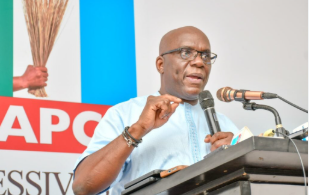
2027: Afenifere, Adebayo, Bakita Bello, Arabambi, Ogunsuyi, others react to APC Muslim-Muslim ticket
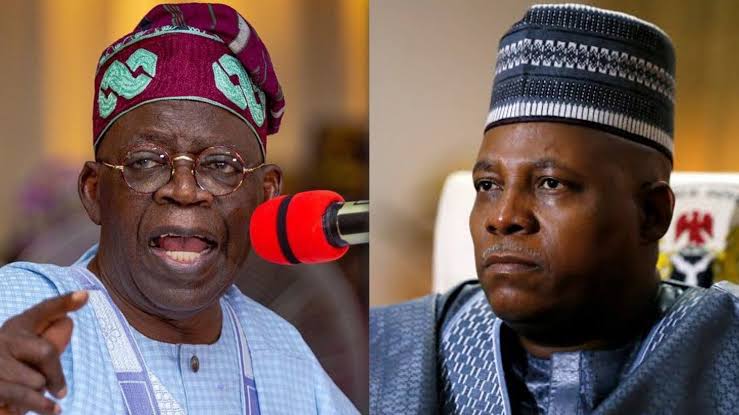
Divergent Views Emerge on APC’s Muslim-Muslim Presidential Ticket Ahead of 2027 Elections
Stakeholders have voiced varied opinions regarding the All Progressives Congress (APC)’s decision to retain its Muslim-Muslim presidential ticket for the upcoming 2027 general election. Some advocates argue that competence should take precedence over religious affiliation, while others emphasize the need for inclusiveness and a stronger focus on governance.
This renewed dialogue follows speculation about President Bola Tinubu and Vice President Kashim Shettima potentially representing the APC once again in the elections.



Afenifere: Prioritize Governance Over Religion
Abagun Kole Omololu, the National Organising Secretary of Afenifere, a pan-Yoruba socio-political movement, stated that the organization is not religiously oriented but is committed to justice, equity, and effective governance for all Nigerians, regardless of their religious backgrounds. He cautioned against politicizing religion for partisan gain, underscoring that most Nigerians prioritize issues such as security, economic opportunities, and quality public services over the religious identity of political leaders.
Omololu cited historical examples where Nigerian leadership has successfully transcended religious divides, specifically mentioning former Lagos State Governor Alhaji Lateef Jakande’s administration, which was grounded in competence rather than faith.
Bakita Bello: Focus on Competence
Former Speaker of the Ondo State House of Assembly, Rt. Hon. Bakita Bello, expressed that the Muslim-Muslim ticket should not be a primary concern. He emphasized the importance of leadership attributes such as competence and integrity over religious identity. Bello pointed out that the past APC presidential ticket could not mitigate issues such as corruption and insecurity, suggesting that Nigerians should evaluate leaders based on tangible outcomes rather than their religious affiliations.
Arabambi: Competence Over Religious Identity
Comrade Abayomi Arabambi, National Vice Chairman (South-West) of a faction of the Labour Party, defended the APC’s decision, arguing that competence should remain the primary concern. He noted that demographics in Northern Nigeria complicate the selection of a vice-presidential candidate and that concerns regarding discrimination and insecurity should not overshadow assessments of governmental performance.
Arabambi insisted that issues like insecurity are not defined by religion, as the violence affects both Muslims and Christians alike.
Yoruba Progressive Forum: Political Strategy
Lateef Olalekan, Coordinator of the Yoruba Progressive Forum, suggested that the APC’s Muslim-Muslim ticket reflects a political strategy aimed at stability rather than a radical departure from representative governance. He acknowledged concerns from Christian communities but reiterated that economic issues have overshadowed religious debates within the administration.
Ebiseni: Governance Beyond Religious Considerations
Chief Olusola Ebiseni, Secretary-General of Afenifere, highlighted the longstanding tradition of rotational leadership between Nigeria’s Northern and Southern regions. He maintained that President Tinubu has not governed based on religious lines and that the political culture should promote inclusivity.
Ogunsuyi: Internal Party Dynamics at Play
Former Ekiti State Commissioner for Information, Lanre Ogunsuyi, contended that internal politics within the APC fuel the ongoing debate about the Muslim-Muslim ticket. He argued that many critics are motivated by personal ambitions rather than genuine concerns about religious representation.
Yoruba Council Worldwide: Need for Inclusive Politics
Aare Oladotun Hassan, President of the Yoruba Council Worldwide, called for political maturity and fairness regarding the APC’s ticket. He noted that democracy thrives when all segments of society feel represented, advocating for leadership that emphasizes competence and equitable policies.
Adebayo: Justice Over Religious Symbolism
Prince Adewole Adebayo, the presidential candidate for the Social Democratic Party (SDP) in the 2027 elections, asserted that historical context shows the Muslim-Muslim ticket is not a significant issue in Nigeria’s political landscape. He emphasized that leadership should be evaluated on broader criteria, such as justice and accountability, rather than solely on religious affiliation.
Conclusion
As the 2027 general election approaches, the discourse surrounding the APC’s Muslim-Muslim ticket continues to evolve. Stakeholders emphasize the need for a focus on governance, competence, and representation that transcends religious identity, suggesting that these factors may play a crucial role in shaping the electoral landscape.