2027: Why youth share of voters dropped – INEC
UniJos Claims Victory in INEC Debate Finale
By Omeiza Ajayi
ABUJA – The Independent National Electoral Commission (INEC) has revealed that the proportion of youths on the voters’ register for the upcoming 2027 general election has decreased to 29.79 percent, down from 39.65 percent in 2023. This was explained by INEC Chairman Prof. Joash Amupitan SAN during the grand finale of the INEC Campus Debate held at the Law Theatre of the University of Abuja on Tuesday.

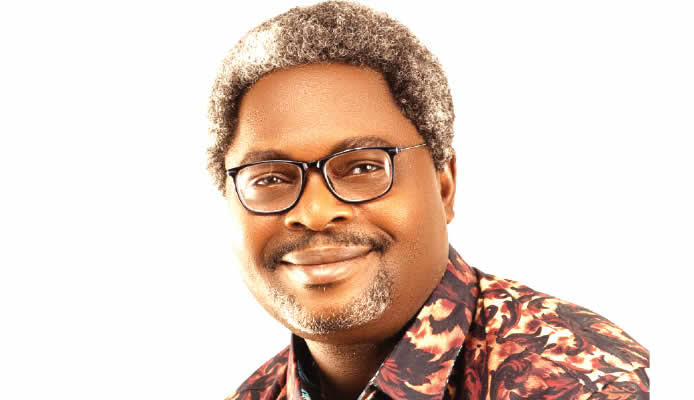
Amupitan clarified that the reduction in youth representation does not indicate a decline in young people’s interest in elections. Instead, he noted that many individuals considered youths in the previous election cycle have now aged into a different demographic.
“Questions have arisen about the decreased number compared to 2023. The reality is that there has been a progressive migration of those classified as youths in 2023 into different age groups,” Amupitan stated.
The current voter register, which is undergoing a review process, lists approximately 29.79 percent of participants as youths. In contrast, the 2023 register included 37,060,399 individuals between the ages of 18 and 34, representing 39.65 percent of the total 93.4 million registered voters.
Amupitan emphasized the importance of initiatives aimed at reducing voter apathy among young people, stating, “Our plan is to catch them young.” He indicated that previous debates revealed a lack of awareness among young voters about the electoral process, citing instances where participants could not identify the INEC chairman.
The University of Jos emerged victorious in the debate, which focused on “Nigeria’s Electoral Process and Democracy.” Bayero University, Kano, placed second, followed by the University of Ibadan in third, and the University of Nigeria, Nsukka in fourth.
Amupitan, an alumnus of the University of Jos, commended the judges for their decision, noting the high quality of the debate. He remarked on the extended time taken by judges to calculate scores, stating they utilized technology to ensure accuracy.
He added, “The clarity of the results suggests that no debater or university should pursue legal action.”
Further, he acknowledged the potential of the finalists, stating, “If it were permissible, I would have employed them immediately,” while also noting that they must first complete their education and the National Youth Service Corps (NYSC) program.
Among the finalists, one debater from Bayero University is studying medicine, while two others from the University of Jos are pursuing law degrees.
Reflecting on his brief tenure, Amupitan stated that elections conducted during his administration have seen notable improvements. “In just over a year, we have overseen four off-cycle elections,” he remarked, referencing successful elections in Anambra, the Federal Capital Territory, Ekiti, and Osun.
He also highlighted the need for increased women’s participation in politics, mentioning that while Belgium mandates gender equality in political offices, no such law currently exists in Nigeria.
In his closing remarks, he praised the finalists for their articulate presentations, urging them to use their voices responsibly.
Professor Hakeem Babatunde Fawehinmi, Vice Chancellor of the University of Abuja, encouraged young Nigerians to register for their voter cards, actively participate in elections, and hold elected officials accountable. He lauded INEC for its initiative, stating that debating serves as a constructive method for managing disagreements. “Debate can be viewed as the opposite of violence,” he concluded.