Declining manufacturing tax signals weakening industrial activity — Oye

Manufacturing Tax Revenue Declines Amid Industrial Challenges
By Yinka Kolawole
The Alliance for Economic Research and Ethics (AERE) reported a significant decline in manufacturing tax revenue for the first quarter of 2026, indicating a slowdown in industrial activity. The organization urged the Federal Government and the Central Bank of Nigeria (CBN) to institute comprehensive reforms aimed at revitalizing the productive sector.

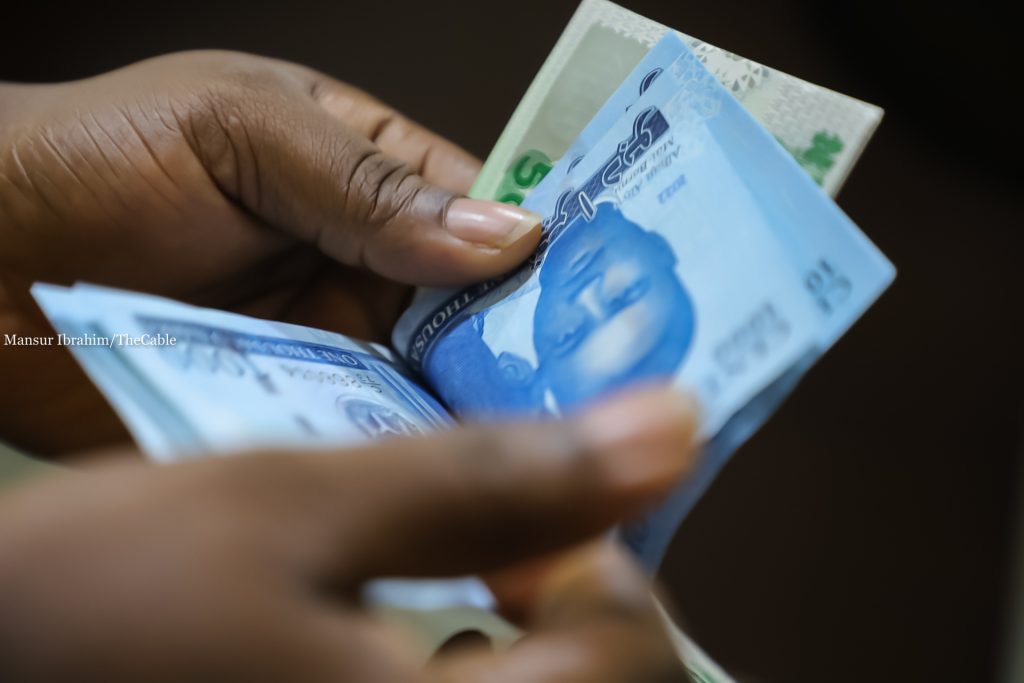

In a policy brief, AERE Chairman Dele Oye highlighted the Bank of Industry’s (BoI) record loan disbursement of N644.9 billion in 2025. However, he argued that this assistance, while notable, is insufficient for bringing about meaningful change in Nigeria’s manufacturing sector.
According to the report, the manufacturing sector experienced a 31 percent year-on-year decrease in Company Income Tax (CIT) revenue, falling to N74.48 billion in Q1 2026 from N107.90 billion in Q1 2025 and N141.84 billion in Q4 2025. This decline is attributed to rising production costs and diminishing profit margins.
Oye praised BoI for supporting 1.68 million jobs and financing projects across 14 strategic sectors. He described the bank’s inaugural Development Impact Report as a pivotal shift toward evaluating success based on developmental outcomes rather than just loan volumes.
While acknowledging the CBN’s supportive policies for productive sectors and commending President Bola Tinubu for prioritizing manufacturing in the Renewed Hope Agenda and the 2025 Nigeria Industrial Policy, Oye expressed concern that manufacturers still grapple with severe structural challenges. These issues include chronic power shortages, commercial lending rates exceeding 35 percent, unresolved foreign exchange forward obligations amounting to $2.4 billion, rising government domestic borrowing, and a lack of affordable long-term financing.
“The manufacturing sector, which should be the engine of this transformation, is gasping. Q1 2026 has seen a decline in manufacturing tax revenue. When manufacturers pay less tax, it is because they are producing less, selling less, and struggling to survive,” Oye stated.
He characterized BoI’s intervention as “a drop of water in a desert of industrial thirst,” underscoring the urgent need for Nigeria to create at least four million jobs annually to keep pace with population growth, while many factories operate below 50 percent of their installed capacity.
Oye called for accelerated implementation of the Nigeria Industrial Policy, the restoration of tax incentives for firms in Free Trade Zones, and the strengthening of the National Credit Guarantee Company. He also advocated for reduced fiscal deficits and domestic borrowing, capping lending rates to manufacturing, agriculture, and technology at 15 percent, expanding capital market funding, and establishing industrial clusters with dedicated power supply.