The right to enforce civil rights is under attack in the US | Civil Rights
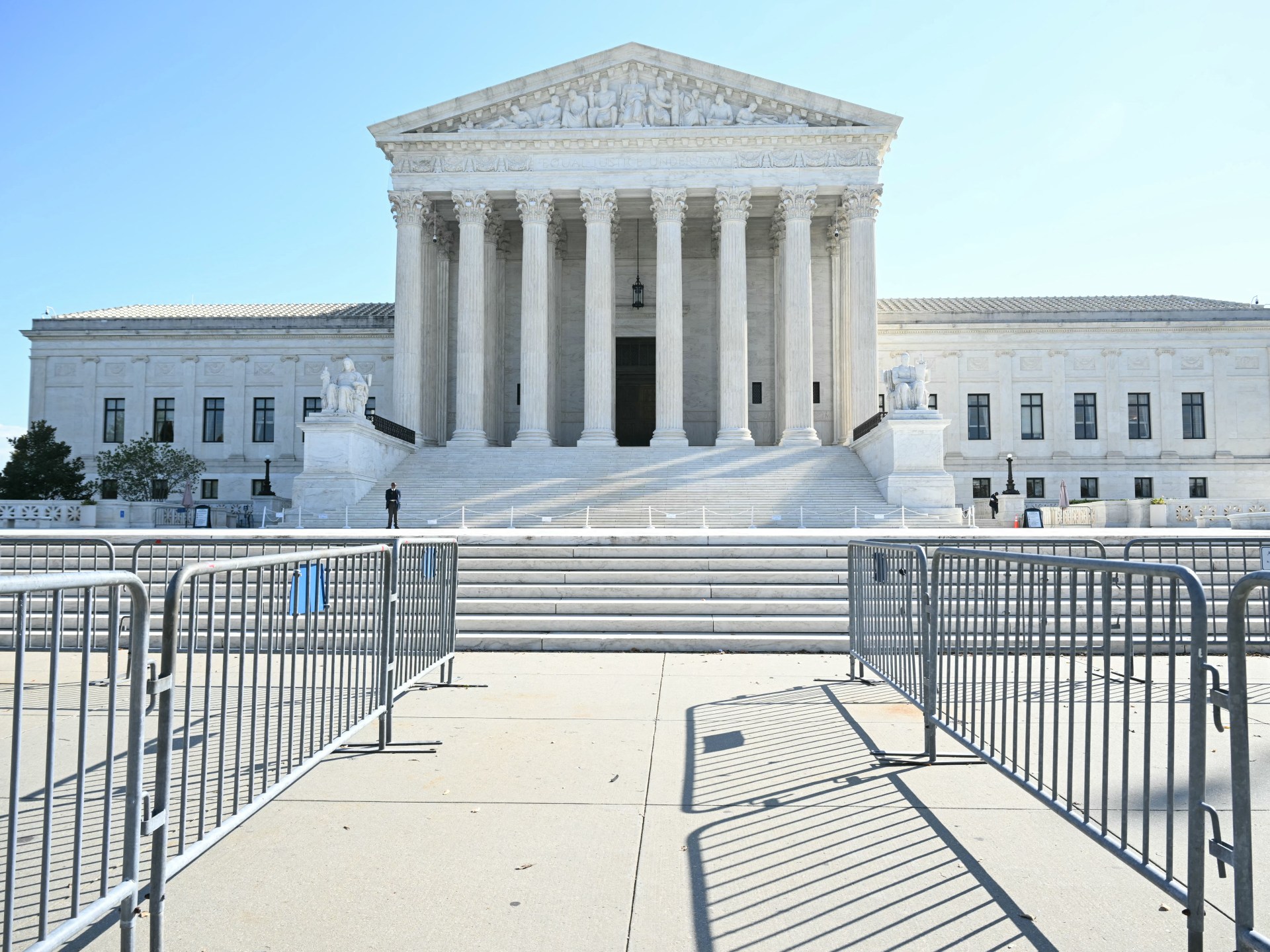
Supreme Court to Hear Case on Employee Rights Under Title IX
This autumn, the U.S. Supreme Court will review a critical question that could significantly impact civil rights enforcement in the country: Who has the authority to uphold these rights? On November 30, the justices will hear a case regarding whether employees at federally funded universities can file lawsuits under Title IX for alleged workplace sex discrimination. The Trump administration has urged the court to determine that university employees do not possess such rights, contending that Congress did not grant them the ability to sue.
This dispute reflects a broader legal initiative to limit the capacity of individuals and advocacy groups to pursue claims of rights violations in court. In June, the Supreme Court declined to review a federal appeals court ruling that blocked Arkansas United, an immigrant advocacy organization, from suing to enforce voting protections for individuals requiring assistance at the polls. In numerous cases, Republican-led states and the Trump administration have promoted the principle that unless Congress explicitly permits private lawsuits, enforcement should primarily be the responsibility of government entities.


While this legal argument may sound technical, it carries significant implications. If individuals and civil rights organizations are barred from pursuing legal action when laws safeguarding their rights are violated, the power to enforce these rights may increasingly rest with the government, potentially diminishing accountability for rights violations.
A private right of action enables individuals or authorized groups to initiate lawsuits to enforce statutory rights. These lawsuits may seek compliance with existing laws or compensation for previous infringements. Such rights are not automatically granted under federal and state law; they often require explicit authorization by Congress or state legislatures. When such authorization is absent, courts must determine whether a law implicitly allows individual lawsuits or whether enforcement remains exclusively with governmental authorities.
Historically, private litigation has played a crucial role in enforcing rights in the United States. George Rutherglen, a professor at the University of Virginia School of Law, emphasizes that the enforcement of civil rights has relied heavily on individual initiative, arguing that while public enforcement remains important, it should not completely replace individuals’ ability to control their rights.
Advocates for private rights of action, including AARP, view them as vital tools for vulnerable populations and communities to protect their rights, particularly when government agencies are unresponsive. However, critics, including the U.S. Chamber of Commerce Institute for Legal Reform, contend that private lawsuits can lead to excessive and unwarranted litigation.
Efforts to restrict private litigation have accelerated in recent years, with Republican-led states increasingly contesting the principle of implied private rights of action. For instance, in the 2001 Supreme Court case Alexander v. Sandoval, the court ruled that Title VI did not create a private right of action for enforcing regulations against discriminatory practices that result in disparate impact on protected groups.
This legal advocacy against private rights has intensified, impacting various areas, including voting rights. In a case involving Arkansas United, the Eighth Circuit ruled that the organization could not sue on behalf of non-native English speakers seeking language assistance at polling places, citing Section 208 of the Voting Rights Act of 1965. The Supreme Court’s decision not to hear the appeal in June left this ruling intact, exacerbating concerns that individuals and advocacy groups may be unable to enforce crucial provisions of voting rights legislation.
Further, Republican-led governments have raised similar arguments in ongoing redistricting and voting rights cases, such as Board of Election Commissioners v. NAACP in Mississippi, where the Supreme Court sent a ruling back for reconsideration while avoiding the private enforcement question altogether. This development heightened concerns about the voting power of marginalized communities, as it suggested that only government agencies, such as the Department of Justice, could initiate actions regarding voting rights violations.
The current administration’s approach to enforcing federal law, particularly in the context of environmental regulations, has also raised eyebrows. The Clean Air Act allows private citizens to bring lawsuits against violators, yet the Justice Department has intervened in a case against xAI, which faces allegations of polluting its surrounding community in Mississippi, arguing that the suit jeopardizes national security and U.S. leadership in artificial intelligence.
As reliance on government enforcement grows, the politicization of the Justice Department under the current administration has drawn criticism for potentially undermining the protection of civil rights for racial and ethnic minorities. The department has been accused of focusing its Civil Rights Division on cases involving white plaintiffs while neglecting broader civil rights issues.
Even if a future administration were to reverse the current department’s politicization, the erosion of private rights of action could leave civil and political rights increasingly unprotected and dependent on a federal agency with limited resources. Recent figures indicate a sharp disparity in the number of voting rights cases pursued by the Justice Department; most active cases are not government-initiated.
As private rights of action face gradual erosion, it becomes essential for politicians, civil liberties advocates, and organizations to actively challenge this trend. Without intervention, hard-won protections could increasingly rely on the willingness of governmental authorities to enforce them, leaving those with rights violations fewer means to seek redress.
Author’s Note: The views expressed in this article are the author’s and do not necessarily reflect the editorial stance of Al Jazeera.


