INEC Figures: How North-West, South-West may hold key to Aso Rock

Upcoming Presidential Elections: A Focus on Nigeria’s Key Regions
By Luminous Jannamike
The contest for Nigeria’s presidency in 2027 will hinge significantly on the dynamics within two critical regions: the North-West and South-West. These areas have historically influenced electoral outcomes, with candidates vying to secure their populations through strategy and coalition-building.
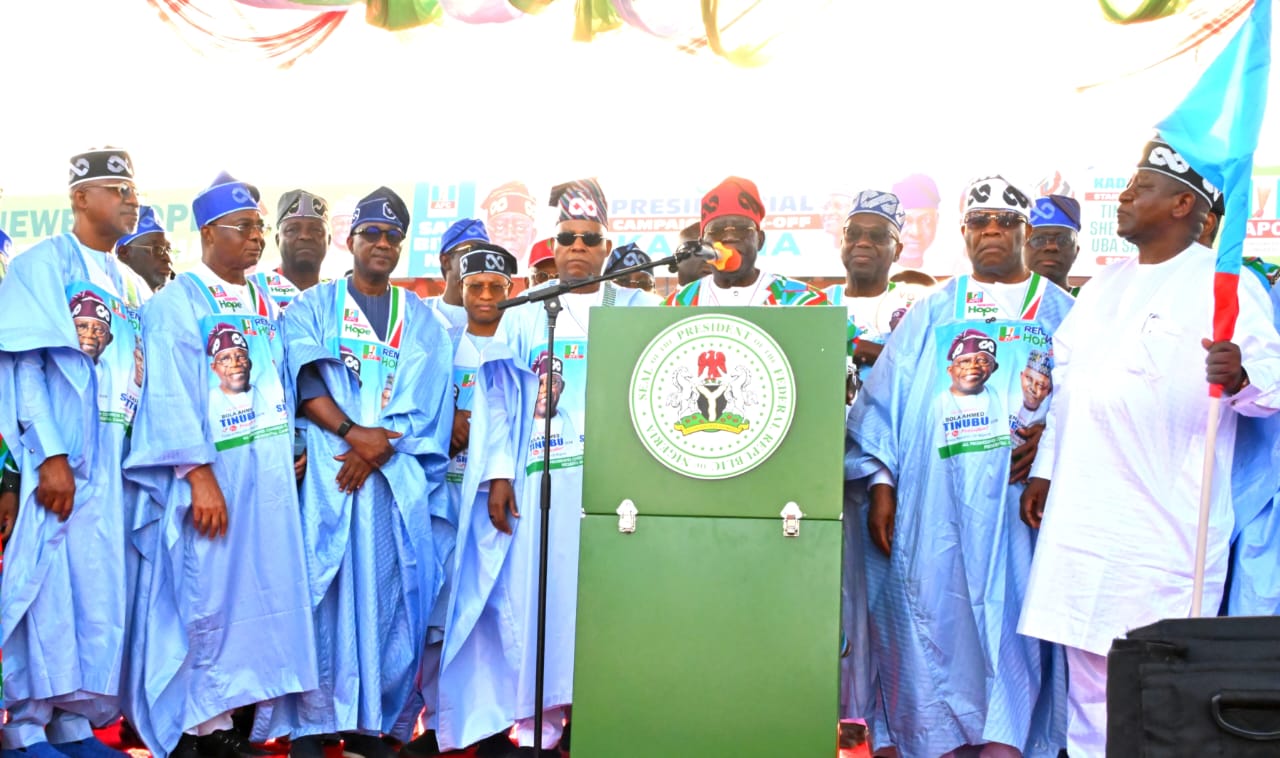

As the incumbent, President Bola Tinubu enters the race with an advantage, but competitors such as Atiku Abubakar and Peter Obi are aware that no region can be regarded as a guaranteed political stronghold. The stakes are high for all candidates, with voter demographics, party infrastructure, and political alignments at play.
According to the Independent National Electoral Commission’s (INEC) 2026 voter register, the North-West boasts 25,083,411 registered voters, while the South-West has 19,614,274. Together, they represent over 43% of Nigeria’s total registered voters, which stands at 103,428,715. This electoral strength makes these two regions pivotal for any candidate’s success.
Converting registered voters into actual ballots remains a complex challenge. Candidates must hold onto their traditional bases while also making inroads into rival territories. Building a coalition that can navigate Nigeria’s intricate political landscape is crucial for both incumbents and challengers.
For President Tinubu, leveraging his South-West stronghold will be essential, but his 2023 victory depended on support from across the country. Atiku and Obi must disrupt Tinubu’s coalition if they intend to challenge him effectively in the upcoming elections.
The North-West ranks as Nigeria’s largest geopolitical voting bloc with 25.08 million registered voters, closely followed by the South-West’s 19.61 million. This demographic significance is underscored by populous states like Kano, Kaduna, and Katsina in the North-West, and Lagos, which has the highest number of registered voters in the nation at 7,488,633.
However, neither region functions as a political inheritance. Voters in the North-West are influenced by multiple party structures and local leadership, while the South-West requires candidates to navigate Tinubu’s established political network, which may not guarantee uniform support. For example, during the 2023 elections, Obi narrowly defeated Tinubu in Lagos, exemplifying how a candidate’s home territory can become a competitive battleground.
Election results also underscore the need for candidates to consider voter turnout, accreditation, and logistics—all of which can significantly impact electoral success. INEC’s figures reflect registered voters, not necessarily those who will cast ballots on election day.
Historical patterns from previous elections highlight the importance of regional strength coupled with a national coalition. Olusegun Obasanjo’s victories in 1999 and 2003 relied on support beyond the South-West, while Muhammadu Buhari’s 2015 success demonstrated that a robust northern base, combined with national support, could unseat an incumbent.
The 2023 election results revealed the dangers of oversimplifying regional voting patterns. Tinubu achieved significant numbers in both the North-West and the South-West, but the North-West did not vote uniformly. Both Atiku and Rabiu Kwankwaso captured key votes, illustrating the fragmentation of the northern electorate. Meanwhile, Obi’s strong showing in Lagos and the South-East, albeit insufficient for the presidency, indicates the competitive landscape awaiting candidates.
Looking ahead, candidates will need to forge alliances and appeal beyond their traditional bases. Tinubu, as the incumbent, must address pressing issues like economic conditions and security to maintain support, especially in the North-West. Conversely, Atiku must broaden his base in the North, while Obi must demonstrate the ability to engage voters in regions where he previously struggled.
Additional factors, including the selection of running mates, the strength of state party organizations, and voter mobilization efforts, will also play crucial roles in the upcoming elections. Candidates must move beyond relying on registered voter numbers and focus on transforming that support into active participation at the polls.
In conclusion, the path to Aso Rock is not limited to any single region. It will require strategic alliances, effective voter mobilization, and a nuanced understanding of Nigeria’s diverse political landscape. Candidates will face the dual challenge of defending their coalitions while seeking to disrupt their opponents’ support bases in a contest that promises to be as complex as it is vital for the future of the nation.