NESG: We’re rewriting Nigeria’s story of under-performance — Tinubu
By Johnbosco Agbakwuru
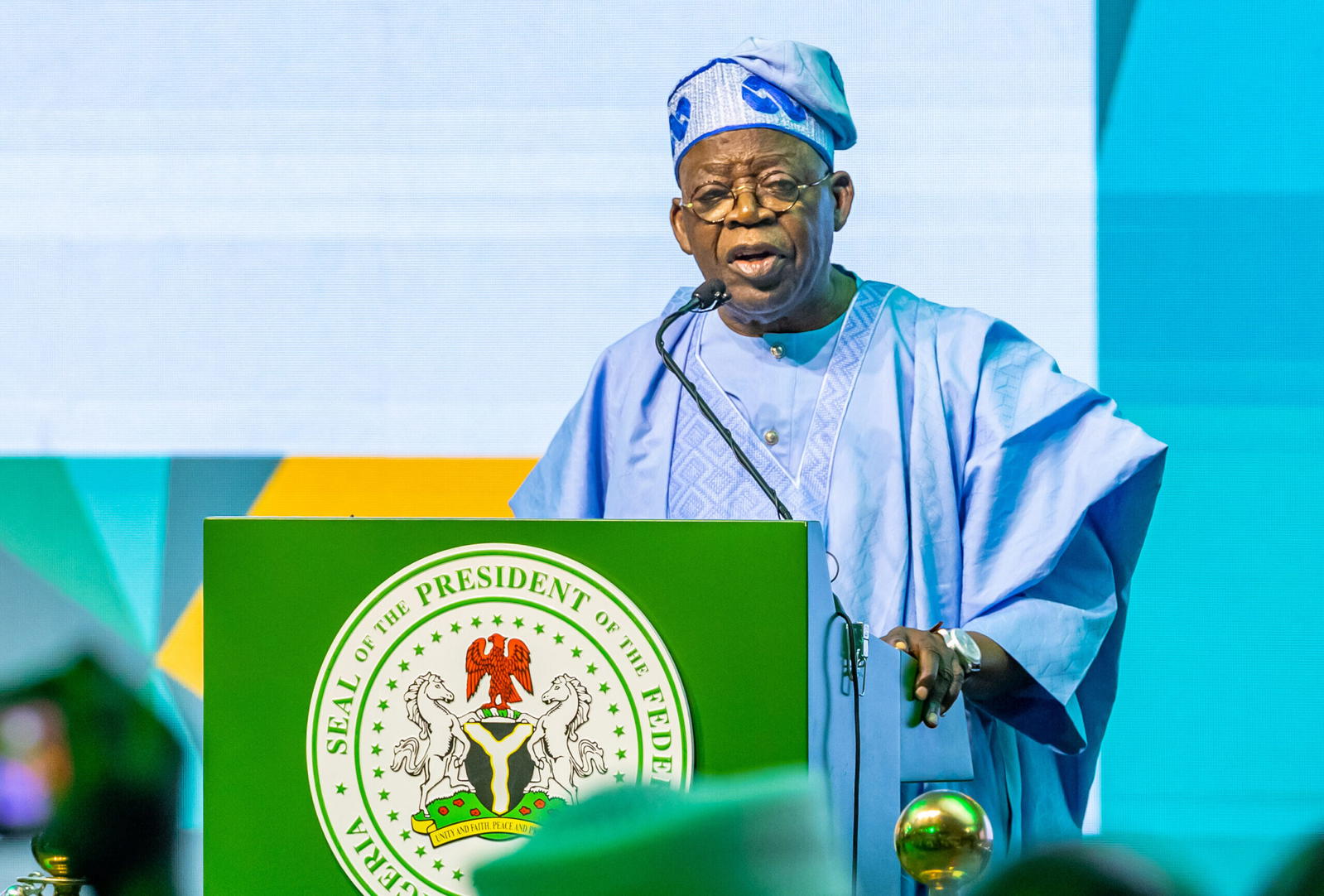
ABUJA – President Bola Tinubu declared on Tuesday that his administration is committed to transforming Nigeria’s history of economic stagnation through comprehensive reforms aimed at removing structural barriers, harnessing the nation’s vast potential, and fostering job creation and equitable growth.
Speaking at the opening of the 32nd Nigerian Economic Summit Group (NESG) in Abuja, Tinubu, represented by Vice President Kashim Shettima, acknowledged that his administration’s journey began with significant challenges, as there are no shortcuts to economic advancement.


“We came to rewrite the story of a nation that has underperformed for too long,” Tinubu stated. “Rescuing the economy means rescuing livelihoods and transforming the fortunes of job seekers, farmers, manufacturers, entrepreneurs, and innovators.”
He emphasized the need to stabilize the economy to capitalize on the opportunities provided by Nigeria’s growing population and to ensure a conducive environment for both public and private sector investment.
The summit’s theme, “Growth That Works: Delivering Jobs, Productivity and Shared Prosperity,” aligns with the previous edition’s ambition of achieving a prosperous and inclusive Nigeria by 2030. Tinubu highlighted ongoing reforms intended to dismantle the structural barriers hindering the effective utilization of the country’s human and natural resources.
“These reforms are restoring confidence, strengthening our economic foundations, and laying the groundwork for sustainable growth,” he added. While expressing optimism about the progress made, he acknowledged that creating jobs is only part of the equation.
“There is a need to enhance the quality of work, reduce underemployment, and tap into the potential of the under-utilized workforce,” Tinubu remarked. He stressed the importance of increasing productivity across all sectors, noting that the effectiveness of infrastructure should be measured by the economic activity it generates.
The President cited statistics from the National Bureau of Statistics indicating that Nigeria’s inflation-adjusted GDP grew by 3.89% in the first quarter of 2026, compared to 3.13% during the same period in 2025. He reported that non-oil industries contributed 96.08% to GDP, with manufacturing up 3.29% and oil sector growth at 2.57%.
Despite these positive indicators, Tinubu stated that his administration’s goals must extend beyond favorable economic data. “Capital importation reached $10.37 billion in the first quarter of 2026, an increase of 83.83% from the previous year,” he said. “We will continue to ease regulatory burdens, strengthen transparency, and enhance access to finance.”
The President also discussed comprehensive reforms in the electricity sector to boost supply and attract investment, as well as initiatives in agriculture aimed at improving connections between farms, storage, processing centers, and markets.
Dr. Amina Mohammed, the United Nations Deputy Secretary-General, acknowledged the progress made under Tinubu’s administration but urged for the urgent need to consolidate and stabilize these reforms while managing public expectations. She praised the African Development Bank for its developmental initiatives across Africa.
During the summit, Minister of Finance and Coordinating Minister of the Economy, Dr. Taiwo Oyedele, introduced a new Nigerian Economic Policy Framework designed to provide a comprehensive approach to Nigeria’s economic decision-making and progress assessment. He called for input from NESG members and private sector experts to refine the framework.
“As we chart this path, we must focus on economic stability, human capital development, and productivity,” Oyedele said.
NESG Chairman Olaniyi Yusuf underscored the importance of stakeholder engagement in fostering inclusive growth and expressed support for the government’s initiatives to improve the business climate in Nigeria.
BUA Group Chairman AbdulSamad Rabiu commended the Tinubu administration’s economic reforms for addressing longstanding barriers to business operations, acknowledging the challenges faced by Nigerians but highlighting improvements in access to foreign currency as a fluctuating yet predictable factor for businesses.
The opening session also included the participation of various state governors, federal ministers, and business leaders from across the country.