‘Debt worse than leprosy’ – Obasanjo tackles Tinubu
Former President Obasanjo Critiques Government Borrowing, Warns on AI Dependency
By James Ogunnaike, Abeokuta
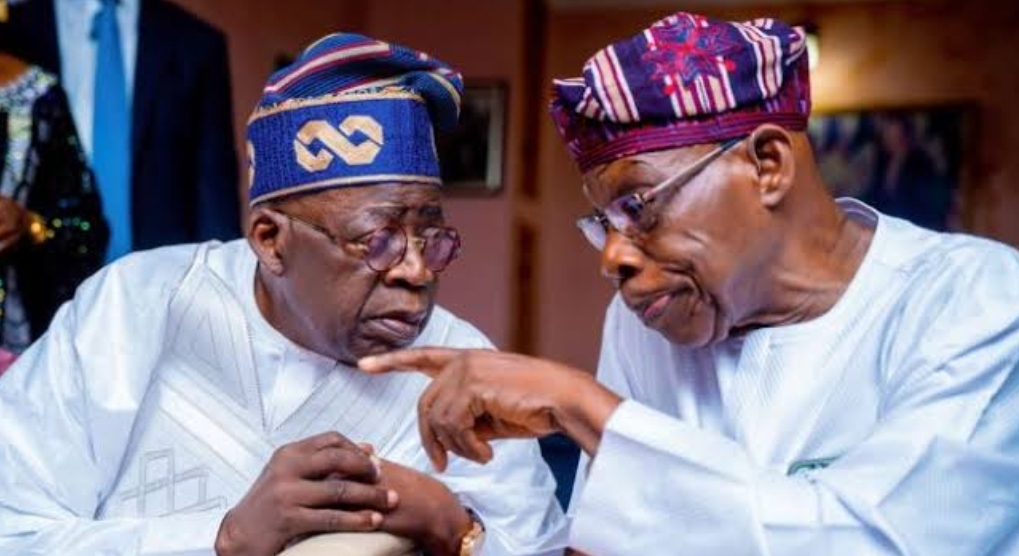
Former President Olusegun Obasanjo has expressed strong criticism of President Bola Tinubu’s rationale for government borrowing, labeling debt as “worse than leprosy” due to its far-reaching implications for both current and future generations.

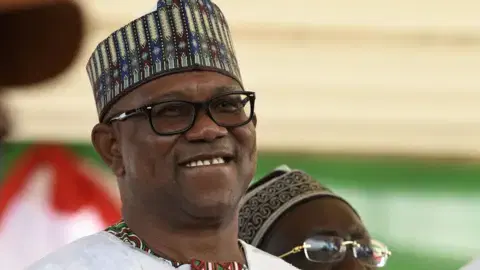
Addressing an audience in Abeokuta, Ogun State, on Friday, Obasanjo articulated concerns regarding the potential jeopardy that public debt poses to Nigeria’s future. He spoke at the Ajibosin Platform, a public forum with the theme, “Leveraging Artificial Intelligence to Solve Grassroots Problems and Accelerate National Development.”
Obasanjo’s comments followed Tinubu’s earlier defense of borrowing, where the president contended that debt is not inherently detrimental if the country possesses the capability to repay it. Observing this, Obasanjo contended, “For anybody to say debt is no leprosy, is absolute nonsense. Debt destroys generations.”
In April, Tinubu defended his administration’s borrowing approach during a meeting with Plateau State leaders, stating, “If we have to borrow, we borrow. Borrowing is not leprosy; we just have to work hard to be able to pay for it.” This statement occurred amid rising concerns regarding Nigeria’s escalating debt profile and the increasing percentage of government revenue allocated to debt servicing.
Obasanjo also critically assessed the country’s economic trajectory, particularly the naira’s depreciation against the U.S. dollar. Reflecting on his experiences as a farmer, he recalled that when he established his farm 47 years ago, the naira’s value was significantly stronger. “At that time, one naira was equivalent to $1.85. What has Nigeria accomplished in 47 years that now sees the naira at 1,500 to the dollar?” he questioned.
Additionally, he urged the nation’s political leadership to demonstrate a clear understanding of Nigeria’s economic challenges and propose effective solutions. He further criticized Nigeria’s reliance on the World Bank and International Monetary Fund (IMF), asserting that these institutions’ economic recommendations often fail to cater to Nigeria’s unique context.
Obasanjo cautioned against allowing foreign entities to dominate the realm of artificial intelligence (AI), warning that such a scenario could mirror historical patterns of exploitation. Although he admitted limited technical knowledge about AI, he stressed the importance of ownership and control: “Anything that is not under your control can be abused against you,” he noted.
In his remarks, he drew parallels between AI’s potential impact and Africa’s colonial history, urging leaders to approach the technological revolution with caution and discernment. He also raised questions regarding the ownership of technology transfers, imploring African countries to critically evaluate the terms of their engagement with foreign technology firms.
At the same forum, guest speaker Dr. Umar Ardo emphasized the risk that Africa could face a new phase of economic exploitation through AI if it fails to secure control over its data and technological resources. In his presentation titled “From Slave Ships to Server Farms: Artificial Intelligence and Africa’s Unbroken History of Extraction,” Ardo highlighted the need for African nations to address fundamental questions surrounding ownership and benefit distribution concerning technology.
He warned that, without equitable safeguards, AI could perpetuate a historical pattern of extraction wherein Africa provides valuable resources while others reap the benefits. “AI offers important opportunities, but without ownership, it could extend a long history in which Africa supplies value while others control and capture it,” he stated.
Ardo called for local development in AI capabilities and data governance, urging nations to foster grassroots economic resilience and ensure direct community benefits from technological innovations.
He concluded by emphasizing the importance of collaboration among African countries to enhance data governance and strengthen bargaining power in dealings with international tech companies. “Africa must reclaim its narrative and ensure that technological developments align with its interests,” he said.