Wike’s Rainbow Coalition, APC govs backing Tinubu in different ways — Fayose

By Adegboyega Adeleye
Former Ekiti State Governor Ayo Fayose, a prominent member of the Peoples Democratic Party (PDP), stated that the ongoing debate over the Rainbow Coalition, led by Minister of the Federal Capital Territory Nyesom Wike, is unlikely to damage President Bola Tinubu’s prospects in the 2027 presidential election.
Fayose suggested that Wike and governors from the All Progressives Congress (APC) are offering varied support to Tinubu. He emphasized that the key factor will be whether the coalition can effectively mobilize votes for the president, particularly in Rivers State.
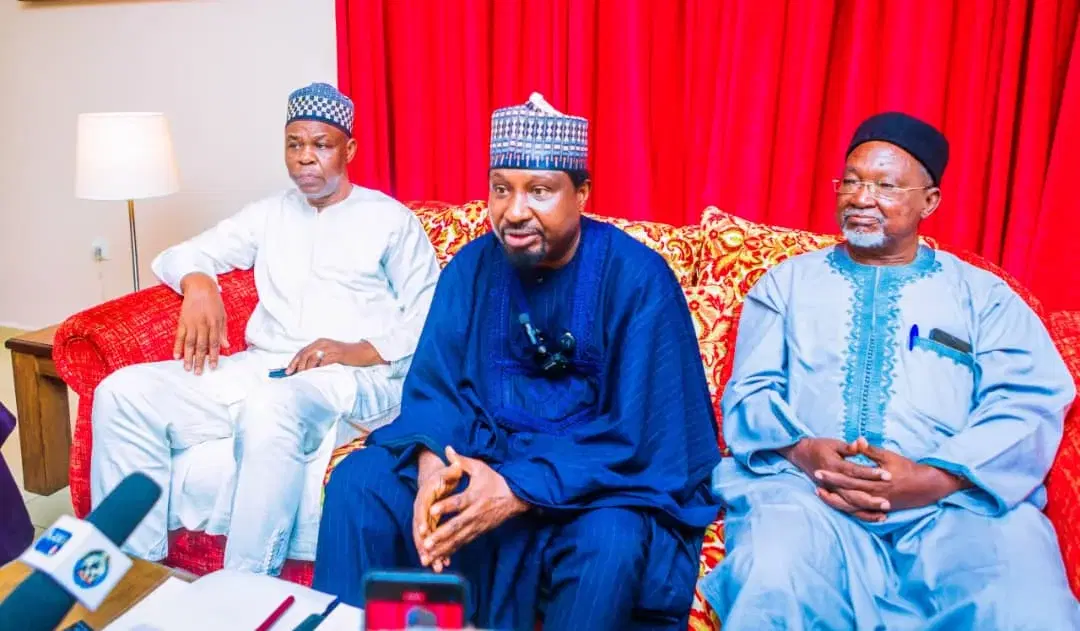
His remarks came during an appearance on Channels Television’s Politics Today on Tuesday, amid heightened discussions about the Rainbow Coalition, which have been sparked by warnings from APC governors regarding potential political alliances that could negatively impact party candidates at various electoral levels.
On Monday, the APC governors, led by Hope Uzodimma, chairman of the Progressive Governors Forum and governor of Imo State, reiterated their stance against any coalition that could undermine Tinubu’s re-election campaign or jeopardize APC candidates.
In response, Wike affirmed that the Rainbow Coalition aims to unite politicians from various parties in support of Tinubu’s re-election, clarifying that it is not intended to alter the internal dynamics of the APC.
Fayose addressed these issues, stating, “I sincerely don’t want to join issues on these two sides. Everyone is simply exercising their interests within the system. If the Rainbow Coalition can deliver votes in Rivers, that’s all that matters to the president.”
He noted that Wike is unlikely to influence votes outside of Rivers, stressing that the coalition is heavily localized. “If Rainbow serves Wike well in Rivers and produces results that benefit Tinubu, then that is significant,” he said.
Fayose downplayed the discord between Wike and the APC governors, asserting that it does not pose a threat to Tinubu’s re-election efforts. He attributed much of the turbulence to political maneuvering and personal ambition rather than a genuine risk to the president’s campaign.
“Controversy can be beneficial. It draws attention to the election,” he remarked. “This situation has not diminished support for the president. Both the Nigerian Governors’ Forum and Wike express their views differently, but their interests ultimately align with the president’s objectives.”
He also indicated that the practicality of asking voters to support different parties across various electorates under a Rainbow Coalition could vary by region, highlighting Wike’s hesitance to extend his support beyond the presidency without weakening his standing within the PDP.
Furthermore, Fayose argued that the 2027 political landscape should be viewed in light of Nigeria’s traditional power rotation practices. He highlighted the expectation that power will shift back to the south, suggesting that Tinubu’s presidency represents a transitional moment.
“The opposition recognizes this reality. Power is destined to return to the south for the next eight years,” Fayose noted. “The notion of rotational presidency, while not constitutional, has become a crucial norm in our politics.”
His comments coincide with intensified scrutiny of the Rainbow Coalition following the APC governors’ rejections, which create a distinction between backing Tinubu’s presidential candidacy and endorsing candidates from other parties at state and national levels. Uzodimma reaffirmed that the governors remain committed solely to APC candidates. Meanwhile, Wike continues to advocate for the coalition as a means of building cross-party support for Tinubu without constituting a rival structure to the APC.