CBN: Oil prices rally brightens naira, foreign reserves’ prospects

Oil Price Rally Boosts Nigeria’s Naira and Foreign Reserves
By Peter Egwuatu, Assistant Business Editor
Brent crude oil prices have risen to approximately $69 per barrel, surpassing Nigeria’s 2026 federal budget benchmark of $64.8. This increase is expected to enhance fiscal revenues, bolster foreign exchange reserves, and stabilize the exchange rate in the country.


Analysts have indicated that a significant military conflict in the Strait of Hormuz, which facilitates around 20% of global oil transportation, could drive Brent prices up to $91 or even $150 per barrel within weeks.
The rally in oil prices follows recent reforms implemented by the Central Bank of Nigeria (CBN), led by Olayemi Cardoso, which have already contributed to gains in the naira and foreign reserves. This trend presents an opportunity for the local currency and external reserves to further solidify their improvements in the coming weeks.
On Thursday, oil prices rose for the third consecutive day amid growing concerns regarding potential U.S. military action against Iran, a key regional oil producer. Brent crude futures increased by 94 cents, or 1.4%, reaching $69.34 per barrel. Meanwhile, U.S. West Texas Intermediate (WTI) crude surged 1.5% to $64.13 per barrel.
The increase in oil prices can be attributed to the geopolitical risks surrounding Iran and other factors, such as unplanned outages in Kazakhstan and the effects of Winter Storm Fern in the U.S.
Amid rising threats of conflict in the Middle East, analysts predict that oil prices may remain elevated, even as the market initially expected a significant oversupply this year. For Nigeria, higher oil prices are critical, as over 80% of the nation’s income relies on oil revenues.
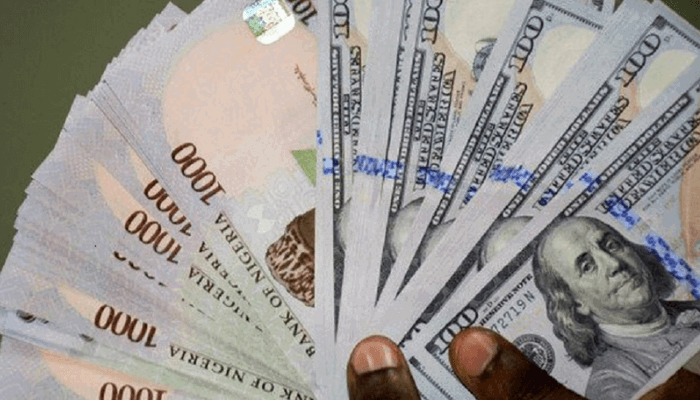
In a noteworthy development, the naira has traded below the N1,400 per dollar level on the official market for the first time in over a year, reflecting a significant psychological and market milestone. Data from the CBN indicated that the Nigerian Foreign Exchange Market rate improved to N1,396.99 per dollar on Thursday, up from N1,400.48 per dollar on Wednesday.
This improvement follows a challenging period during which the naira traded as low as N1,422.07 per dollar on January 22. The currency’s stabilization below N1,400 represents progress in official market pricing.
At the parallel market, the naira also saw gains, strengthening by 1.06% to N1,454 against the dollar, according to Cowry Asset Management Limited. Aminu Gwadabe, President of the Association of Bureaux De Change Operators of Nigeria, noted the currency’s stability across various market segments, ending a period of significant volatility.
Bismarck Rewane, Managing Director of Financial Derivatives Company, estimated the fair value of the naira to be approximately N1,257 to the U.S. dollar, indicating that the currency is undervalued by about 11% when assessed through the purchasing power parity (PPP) model.
Rewane presented this analysis at a recent economic outlook session organized by the Association of Corporate Treasurers of Nigeria, emphasizing that currencies typically converge to their PPP-implied values over a five-year period.
He further highlighted that despite a weak dollar affecting various markets, the situation is advantageous for Africa, including Nigeria, as confidence in the macroeconomic landscape continues to rise. This confidence is bolstered by increased foreign exchange inflows and improved market governance.
External Reserves on the Rise
Nigeria’s external reserves have been on an upward trend, increasing by $5.82 billion, or 14.45%, to reach $46.11 billion as of January 28, 2026. This marks the first time in nearly eight years that reserves have crossed the $46 billion benchmark, indicating steady growth since 2025.
Recent data indicates that the reserves have improved by about $510 million over 22 days, moving from $45.502 billion at the end of December. Analysts view this reserve accumulation as a sign of stronger buffers for import coverage and currency stability, particularly in light of ongoing forex reforms.
Foreign capital inflows have also surged, reaching $20.98 billion in the first ten months of 2025. This represents a 70% increase compared to total inflows for 2024 and a notable 428% increase from the $3.9 billion recorded in 2023.
Governor Cardoso noted that the naira is now trading within a more stable range, with the gap between the official and parallel markets narrowing significantly. He emphasized that Nigeria is demonstrating greater resilience to external shocks than in years past.
Infrastructure and Policy Developments
Prof. Abiodun Adedipe, founder and Chief Consultant at B. Adedipe Associates Limited, identified recent policy shifts that have positively impacted the economy. He highlighted the elimination of arbitraging opportunities in the forex market, the removal of petrol subsidies, and ongoing fiscal consolidation efforts as vital measures contributing to economic stability.
According to Adedipe, Nigeria’s young and rapidly growing population, coupled with rising urbanization and improvements in infrastructure, presents opportunities for continued economic growth. He noted that with sustained reforms, Nigeria can enhance its global competitiveness and improve the ease of doing business.
The CBN’s coordination with fiscal policies has also played a critical role in strengthening macroeconomic stability, according to Cardoso. The discontinuation of direct deficit financing marks a commitment to fiscal discipline, complemented by institutional reforms aimed at enhancing revenue mobilization and public financial management.
Overall, Nigeria’s oil sector remains resilient, with recent reports indicating a substantial increase in revenue for the Nigerian National Petroleum Company Limited (NNPC Ltd), which reported revenues of N5.08 trillion in October 2025, up from N4.27 trillion in September.
As the situation evolves, both oil price trends and currency performance will be crucial in shaping Nigeria’s economic outlook in the near future.