Obi-Kwankwaso Alliance: NDC surge rattles APC, reshapes 2027 battle lines
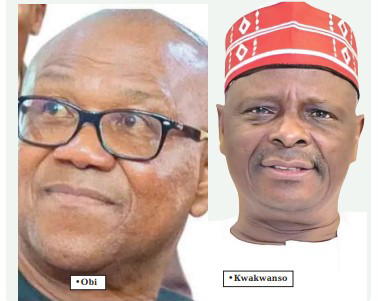
Obi, Kwankwaso Join Forces, Reshaping Political Landscape Ahead of 2027 Election
By Luminous Jannamike, Abuja
Nigeria’s opposition political scene has shifted significantly this week following the formal alignment of former presidential candidates Peter Obi and Rabiu Musa Kwankwaso with the Nigeria Democratic Congress (NDC). This move has catalyzed a series of defections that could transform the dynamics leading up to the 2027 presidential election.

In the days following their departure from the troubled African Democratic Congress (ADC), several senators and House of Representatives members affiliated with the former coalition began gravitating toward the NDC. This influx has provided the relatively nascent party with enhanced visibility and legislative strength.
The rapidity of this political realignment has sparked uncertainty among both the ruling All Progressives Congress (APC) and competing opposition factions. Observers are now debating whether Nigeria’s opposition can consolidate effectively to challenge President Bola Ahmed Tinubu in the upcoming election.
The growing attention on this new alliance derives from a changing political landscape and anxieties that the opposition may have finally found a unifying platform after months of disunity and unproductive coalition discussions.
In the 2023 presidential race, Obi received approximately 6.1 million votes, while Kwankwaso garnered around 1.5 million, totaling over 7.6 million against Tinubu’s estimated 8.8 million. Their past campaigns, while separate, fostered substantial grassroots support, particularly among young and first-time voters, as well as northern populist groups.
The significance of the Obi-Kwankwaso alliance lies not only in their combined electoral strength but also in the potential to merge their organizational capabilities, volunteer networks, and legislative influence under a unified political banner. Unlike in 2023, this alliance has begun attracting current lawmakers.
Senator Victor Umeh, one of several defectors to the NDC, cited instability and ongoing litigation within the ADC as driving factors in his decision. He noted the internal conflicts had impeded political actors’ ability to address pressing national issues effectively.
Umeh argued that the persistent struggles within the ADC represent a considerable weakness for opposition politics in Nigeria. He indicated that his choice followed extensive discussions with supporters and political allies.
The recent movement of lawmakers may also herald further defections among opposition figures in the coming months, contingent on the NDC’s continued growth.
Attention has shifted as the ADC, once viewed as a potential coalition vehicle for various opposition leaders, has shown signs of fragmentation due to internal disputes and fears of ongoing litigation. This environment has prompted Obi and Kwankwaso to seek refuge in the NDC, which its leaders characterize as more stable.
Obi emphasized the need to escape perpetual internal crises and focus on governance issues impacting everyday Nigerians. “We are coming to be part of the peaceful family that will work hard to build a united, secure, prosperous Nigeria that works for everybody,” he said during his unveiling as an NDC member.
Kwankwaso framed the alliance as part of a broader mission to rebuild democratic opposition politics and offer voters an alternative to the current administration.
Leaders within the NDC have welcomed the shift in perception, asserting that the party is becoming the new hub for opposition politics. Former Bayelsa State Governor and NDC national leader Henry Seriake Dickson described the party as united and free from the factional strife that affects its rivals.
NDC officials have ramped up efforts to attract defectors from the ADC, Labour Party, and other discontented factions within the People’s Democratic Party (PDP), arguing that cooperation is vital for electoral competitiveness in 2027.
While the ruling APC has downplayed the NDC’s emergence, describing the opposition as fragmented and inconsistent, analysts note that the alliance’s appeal among younger voters and urban populations poses a potential threat.
The NDC’s capacity to maintain momentum and establish robust organizational structures will be critical as it seeks to transition from a fledgling party to a formidable political player.
Simultaneously, concerns over electoral credibility are resurfacing, with some opposition members questioning whether even a united front can succeed amidst existing institutional challenges. INEC Chairman Joash Ojo Amupitan acknowledged ongoing security issues but remained committed to organizing a fair electoral process.
These developments signal a significant shift in Nigeria’s political discourse, as the once-fractured opposition landscape appears to be consolidating ahead of the 2027 elections. How effectively this alliance can maneuver the complexities of Nigeria’s political system remains to be seen.