Tinubu’s 3rd Anniversary: The eve of reckoning—who will tell the President?
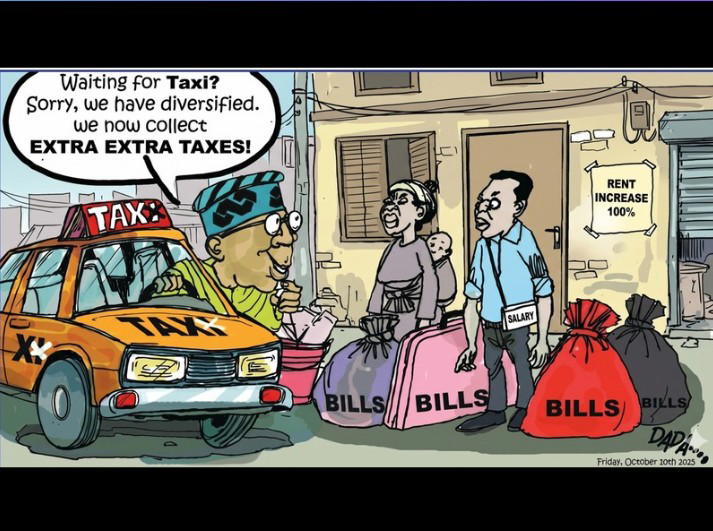
Analysis: Assessing Tinubu’s Three Years in Office
By Jide Ajani, General Editor
In a comprehensive evaluation, members of the Vanguard Board of Editors have reviewed President Bola Tinubu’s performance across critical sectors, including education, healthcare, the judiciary, fiscal policies, security, and infrastructure. While some consensus exists on his commitment to national progress, a prevailing sentiment reflects significant challenges facing the administration.
Three years into his presidency, which equates to 1,095 days, officials close to Tinubu continue to assure Nigerians of renewed hope. Despite the acknowledgment from the president of the hardships faced by citizens, conflicting narratives emerge from his advisors regarding the nation’s reality.
Some have gone so far as to claim that Nigeria is experiencing its best period since independence, echoing sentiments that Tinubu is the country’s most effective president. This disconnect raises concerns; without honest engagement and feedback from his inner circle, the president risks operating under an illusion that all is well.
For many Nigerians, President Tinubu’s public persona often comes across as unsympathetic. While political allies may counter this perception, the impact is clear. Although he aims to rectify long-standing issues with innovative approaches, a gap persists between his initiatives and their actual outcomes.
Questions arise about who will inform the president about the true extent of public suffering, particularly in light of his administration’s reforms. Concerns about the lifestyles of some of his appointees juxtaposed against widespread poverty illustrate this disconnect.
Critics have raised issues regarding significant government contracts awarded to single contractors, suggesting a lack of inclusivity. Additionally, there are claims that relief efforts are politically motivated and fail to address the needs of the broader population. As a result, voices of discontent related to hunger and poverty are growing louder, fueled by the perception that wealth is concentrated in the hands of a few.
There is a challenge in convincing segments of the population that the administration is genuinely invested in their welfare. Observations regarding the president’s family, notably the lifestyle of his son, raise further questions about the alignment of leadership demands with the realities faced by ordinary citizens.
The president’s substantial influence over both legislative and judicial bodies poses both an opportunity and a caveat. His decisions could lay the groundwork for a more equitable political framework; however, there are concerns that current strategies primarily serve the interests of the All Progressives Congress (APC) and associated allies.
Historical comparisons to past leaders, such as Umaru Musa Yar’Adua, highlight the importance of leadership focused on overall national well-being rather than narrow political survival. As the political landscape evolves, there is a recognized need for a collaborative environment allowing opposition voices to thrive.
Tinubu’s initial bold moves, such as removing fuel subsidies, reveal a willingness to take risks. However, the resulting economic strain on the population presents a stark contrast to anticipated benefits, which have yet to alleviate public distress.
Despite these challenges, the administration can claim several achievements, including reforms in taxation, increased revenue, local government autonomy, and infrastructure projects such as the rehabilitation of key highways and ports.
The crux of the issue lies in a troubling economic narrative: as government wealth increases, many citizens find themselves impoverished. This disconnect poses critical questions about the efficacy of current policies.
The Vanguard Board’s analysis delves into Tinubu’s performance articulated in his Renewed Hope Manifesto, addressing ongoing concerns spanning education, health, security, and more. While there is acknowledgment of his intentions to serve the nation, the overarching consensus highlights significant worries about the current state of affairs. Ultimately, the call remains: who will communicate these pressing realities to President Tinubu?