Tinubu’s re-election bid: Why Kaduna is more crucial than Lagos, Kano, Katsina, Rivers
By John Alechenu
As political strategists examine the electoral landscape in Nigeria, Kaduna State is emerging as a crucial focus for President Bola Tinubu as he seeks re-election in 2027. Contrary to expectations, it is not the state of Kano, with its largest voter base, or Lagos, Tinubu’s political stronghold, that holds paramount significance. Instead, analysts emphasize that Kaduna, often regarded as a “mini-Nigeria” due to its ethnic and religious diversity, plays a pivotal role in the election.
Kaduna is characterized by a predominantly Muslim population in the north and a largely Christian demographic in the south, along with more than 60 ethnic groups, including the Hausa-Fulani, Bajju, Atyap, Ham, and Gwong. This diversity makes the state an essential battleground, as its political dynamics can influence outcomes across the north.
The electoral stakes in Kaduna are substantial. Registered voters in the state totaled approximately 4.3 million, making it the third largest in the North-West zone, just behind Kano and Katsina. In the 2023 presidential election, the zone accounted for over 6.5 million votes, with Kaduna alone providing a significant number.
While the All Progressives Congress (APC) has a stronghold in Katsina, it faces stiff competition in Kaduna. In the last election, former Vice President Atiku Abubakar of the Peoples Democratic Party (PDP) garnered 554,360 votes, compared to Tinubu’s 399,293, with Peter Obi of the Labour Party receiving 294,494. The APC did secure the governorship seat, but the distribution of votes highlighted the challenges ahead.
Kaduna’s political landscape is marked by its complex alliances. No party can claim complete dominance, as victories are often dependent on localized strategies tailored to individual polling units and wards. A decisive win in Kaduna could provide momentum for Tinubu’s campaign; conversely, a loss would resonate negatively among supporters in the broader North-West.
In recent months, political conversations have shifted across the state. In areas like Tudun Wada and Sabon Tasha, locals are focused on economic issues, such as the exchange rate of the naira and the rising cost of living. This sentiment is echoed in academic circles, where discussions around tax reform are prevalent.
Kaduna boasts a politically aware electorate, including retired military officials, academics, and small business owners. The state’s influential institutions, such as the Jama’atu Nasril Islam and the Christian Association of Nigeria, hold sway in setting narratives that can extend beyond its borders. For Tinubu, managing these opinions will be essential; any acknowledgment of progress is likely to be heard throughout the North-West.
Recent developments have seen improved security conditions in the region, particularly along the Kaduna-Abuja highway and in local farming communities. The resumption of train services has returned some normalcy to travel, but locals are still cautious. Sustained improvements in security and economic stability will be critical for Tinubu as he formulates his campaign strategy.
However, concerns remain. The effects of subsidy removal and rising prices have intensified discussions around everyday necessities, impacting voters’ perceptions of the government. The unfinished business regarding the Muslim-Muslim ticket from the 2023 election continues to resonate, particularly concerning representation and inclusivity.
Political analysts indicate that the 2027 elections will demand careful consideration of diverse voter motivations. Factors such as identity politics, economic frustration, and calls for change will heavily influence decisions at the ballot box.
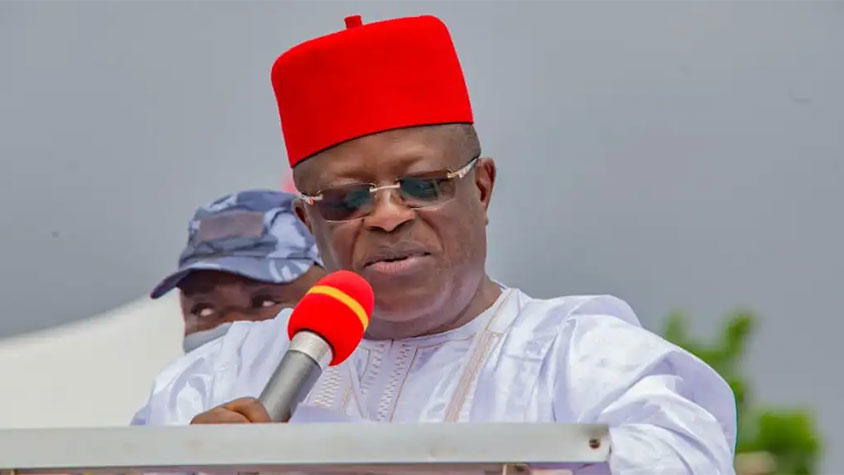
As the APC campaigns in Kaduna, it will emphasize road construction and infrastructure projects, which officials claim will resonate with voters. Minister of Works David Umahi, positioned as the Deputy Director General for the APC’s 2027 Presidential Campaign, highlighted the relevance of the ongoing Abuja-Kaduna-Kano road project, which he believes will galvanize support for Tinubu.
In summary, the political significance of Kaduna cannot be overstated. The path to the 2027 election for Tinubu will undoubtedly run through this complex and pivotal state, making it an integral part of the national conversation.