2027: Why ADC Supreme Court battle may weaken anti-APC coalition

By Luminous Jannamike
The leadership crisis within the African Democratic Congress (ADC) has escalated to the Supreme Court, raising questions about the coalition’s viability as the 2027 elections approach. As internal disputes unfold, time is becoming a critical factor in demonstrating political readiness to the Nigerian electorate.
With the Supreme Court’s impending decision, the ADC faces the challenge of recovering from potential political damage that may have already occurred. The coalition’s focus, ironically, has shifted from policy discussions and governance to legal battles over court orders, factional disputes, and party structure governance. Each legal ruling has led to further appeals and extended uncertainty—a situation that could hinder its electoral prospects.


The recent Court of Appeal ruling is particularly significant. In a split decision, the court upheld a prior Federal High Court ruling that restricts the Independent National Electoral Commission (INEC) from recognizing state congresses organized by the faction led by David Mark, the ADC’s National Working Committee (NWC). The appellate court determined that only elected state executive committees have the authority to conduct congresses, affirming that the actions taken by Mark’s leadership were invalid due to prior court orders.
Mark’s faction has filed an appeal with the Supreme Court, asserting that the judgment neither strips them of leadership nor invalidates their candidates listed with INEC. Legally, the dispute remains unresolved, but politically, it presents new challenges for the ADC.
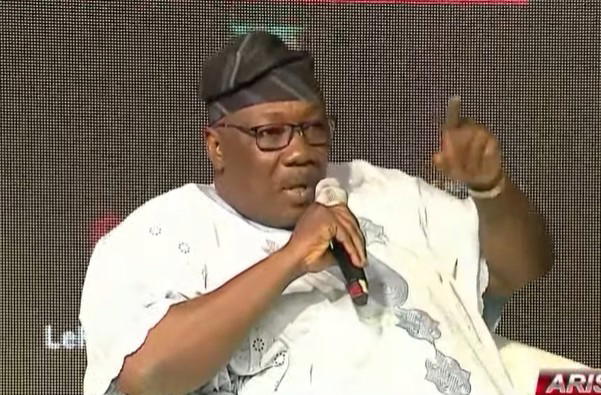
Prominent constitutional lawyer Liborous Oshoma discussed the implications of the Supreme Court’s forthcoming decision on Arise TV’s The Morning Show. He emphasized that the ADC needs to prove the legitimacy of recent congresses conducted by its structures, not a caretaker committee appointed by the Mark-led NWC.
If the court rules against the ADC, the ramifications may extend beyond state executive issues, potentially jeopardizing the party’s presidential ticket. As Oshoma noted, the ADC must act with urgency; time could be its most formidable opponent.
Beyond legal arguments, the political context is complex. The Mark-led NWC currently maintains INEC approval for candidates already registered, including high-profile presidential and legislative contenders. In contrast, the opposing Kachikwu faction, despite claiming rightful authority, lacks control over these submissions.
Should the Supreme Court uphold the Appellate Court’s ruling, the faction recognized as officially leading the party may find it difficult to address candidates who were already submitted under another faction. Conversely, a reversal of the ruling could lend legal support to Mark’s group but may force them to confront lingering internal discord and distrust.
The ongoing legal skirmishes have sparked allegations from opposition politicians that the ruling All Progressives Congress (APC) benefits from these leadership disputes, although no substantial proof has surfaced to confirm that the judiciary or INEC is acting at the government’s behest. What remains evident is that the protracted litigation is draining resources, fracturing party unity, and alienating potential supporters.
History provides cautionary lessons about unresolved internal strife in Nigerian politics. The People’s Democratic Party (PDP) experienced significant setbacks during its own leadership crisis prior to the 2019 elections, while the APC faced electoral losses in Zamfara due to improperly conducted primaries. These situations illustrate that parties can falter not solely because of stronger opponents but because internal conflicts overshadow electoral strategies.
Three potential outcomes could result from the Supreme Court’s ruling. The court may affirm the Appellate Court’s decision, leading to difficult negotiations regarding party structures. Alternatively, the court might overturn the ruling, allowing the Mark-led faction to refocus on campaigning. The third, and perhaps most consequential, option is an outcome that delays resolution close to critical electoral deadlines, leaving whichever faction prevails with a weakened party.
For Nigerians, the stakes extend beyond one political entity. A robust democracy relies on competitive elections and credible alternatives. If opposition parties are mired in litigation rather than engaging with voters, the implications for democratic quality may be profound. As the Supreme Court prepares to hear the ADC’s case, the broader question looms: Can a political party regain the electorate’s confidence after prolonged legal disputes?