Nigeria’ll not be Africa’s warehouse, but Africa’s workshop — Tinubu
Nigeria Aims to Become Africa’s Industrial Hub, Tinubu Declares
By Yinka Kolawole
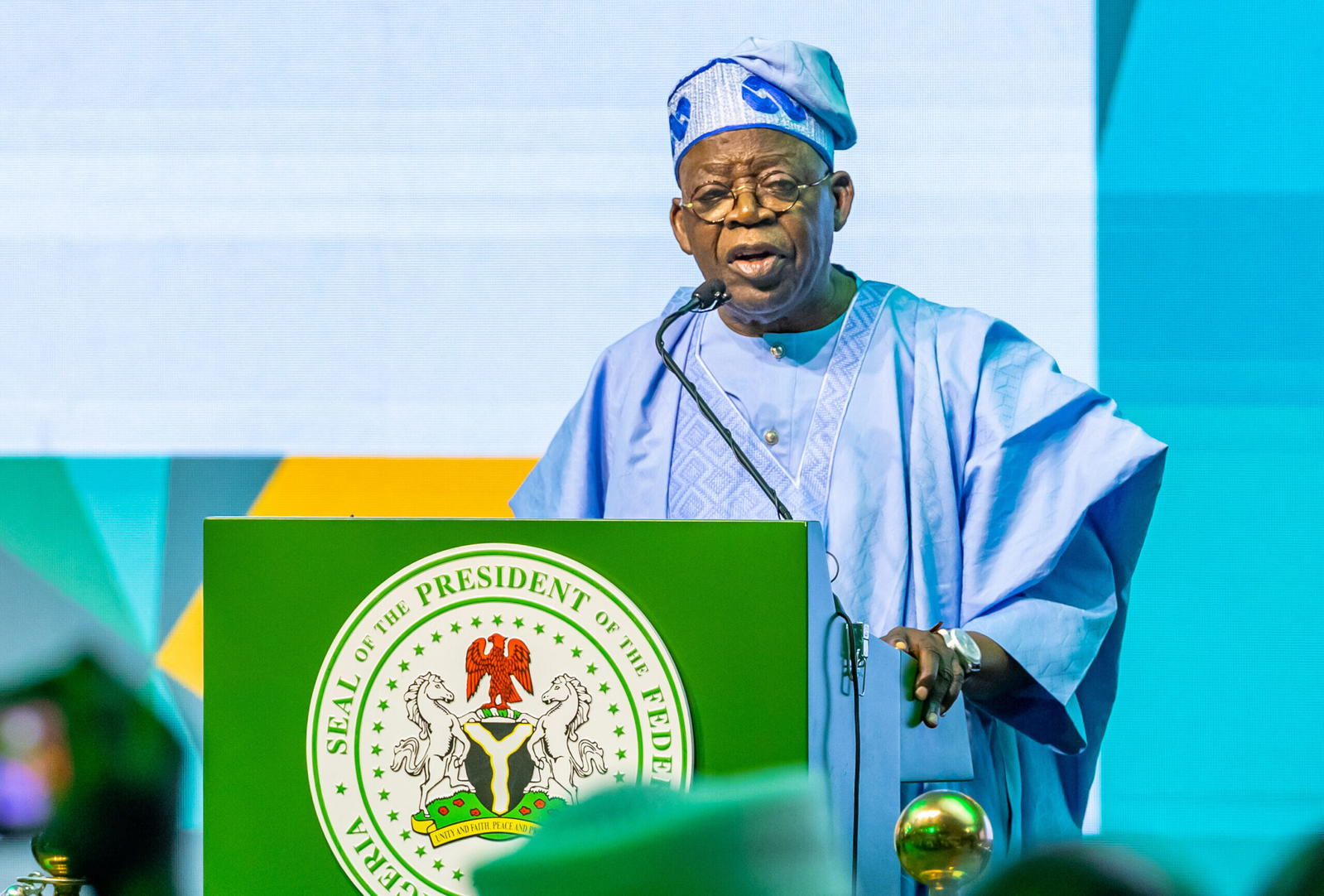
LAGOS—President Bola Tinubu announced Nigeria’s commitment to transforming its economy by focusing on industrial production instead of relying on raw material exports and finished product imports. Speaking at the 6th Adeola Odutola lecture and Presidential luncheon hosted by the Manufacturers Association of Nigeria (MAN) on Wednesday, Tinubu emphasized the country’s aspiration to be Africa’s industrial workshop.


Represented by Minister of State for Industry, Sen. John Enoh, Tinubu addressed the theme “Leveraging National Industrial Policy to Position Nigeria as Africa’s Industrial Hub.” He articulated Nigeria’s goal of leveraging industrial policy to bolster manufacturing, enhance local value addition, and capture a larger portion of the African market.
“Nigeria will not be Africa’s warehouse, storing what others make,” Tinubu stated. “Nigeria will be Africa’s workshop, making what Africa needs and sending it with pride across the continent and beyond.”
The president highlighted a significant decline in the manufacturing sector, which dropped from over 20% of the country’s GDP in the early 1990s to below 10% projected by 2024. Although manufacturing recorded growth rates of 3.29% in the first quarter of 2023 and 3.24% in the second quarter, he cautioned that the sector continues to face serious financial and operational challenges.
To address these issues, Tinubu referenced the Nigerian Industrial Policy introduced in February, which aims to increase manufacturing’s GDP contribution to between 20% and 25% by 2030. This goal will be supported by industrial financing targeted at up to 5% of GDP.
The government plans to enhance reliable energy supply, provide affordable long-term financing, ensure fair market conditions, improve security along industrial corridors, and strengthen accountability for policy implementation, Tinubu explained.
Additionally, he announced that the Industrial Revolution Work Group (IRWG) will conduct quarterly meetings with manufacturers to monitor policy execution.
Tinubu also pointed to the opportunities presented by the African Continental Free Trade Area, which encompasses a market of 1.4 billion people with a combined GDP of approximately $3.4 trillion. He urged Nigerian manufacturers to leverage the country’s population, entrepreneurial spirit, natural resources, and strategic location to fulfill continental supply demands.
“The government will clear the road. You must drive the trucks,” the president told business leaders, encouraging them to invest in capacity expansion, enhance backward integration, meet export standards, train Nigerian youth, and treat Africa as their primary market.
Tinubu concluded with a call to end the current cycle of exporting raw goods like cocoa, crude oil, and cotton while importing products such as chocolate, fuel, and clothing. “We are writing a new chapter, and we are writing it in factories,” he declared.