33 years after: Can Nigeria ever have another election like June 12?
By Clifford Ndujihe, Politics Editor
Thirty-three years ago, on June 12, 1993, Nigeria held what many consider its most credible presidential election, characterized by a unique voting system dubbed Option A4. This election featured only two candidates, and voters cast their ballots by physically queuing behind their chosen candidate or party, without thumb-printing. The National Electoral Commission (NEC), led by Professor Humphrey Nwosu, accurately recorded the votes, ensuring a transparent outcome.
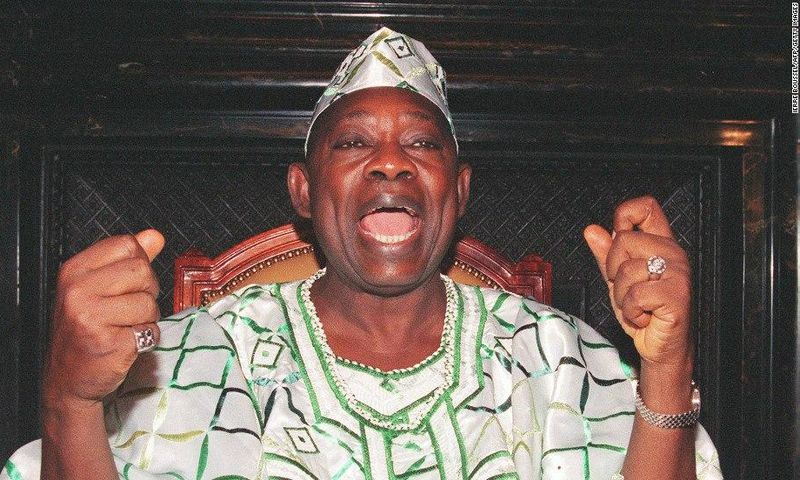
Chief Moshood Kashimawo Olawale Abiola, the candidate of the Social Democratic Party (SDP), emerged victorious with over eight million of the approximately 14 million votes cast. His opponent, Bashir Othman Tofa of the National Republican Convention (NRC), received around six million votes.
Despite the clear results, the military government under General Ibrahim Badamasi Babangida annulled the election, plunging Nigeria into a prolonged political crisis that would not begin to resolve until the election of Chief Olusegun Obasanjo in 1999. Since that election, Nigeria has struggled to replicate the standards of conduct and credibility it exhibited on June 12, 1993.
As the country commemorates this significant date, it also marks the eighth anniversary of the federal government recognizing June 12 as Democracy Day, a designation formalized in 2019. This year’s observance marks the third led by President Bola Tinubu. In 2018, President Muhammadu Buhari apologized to Abiola’s family, posthumously awarding him the Grand Commander of the Federal Republic of Nigeria (GCFR).
Today, Nigeria faces numerous challenges including insecurity and political division, as it prepares for upcoming elections. The governorship election in Ekiti scheduled for June 20, along with by-elections in several constituencies across four states, raises pressing questions regarding electoral integrity and the state of democracy in the nation.
Abiola’s campaign was centered on a welfare theme, promising a “Farewell to Poverty.” However, statistics indicate that poverty has persisted in Nigeria. According to data from the Nigeria Bureau of Statistics, before the 1993 election, nearly 39 million Nigerians were living below the poverty line, a figure that grew significantly in the years following the annulment.
Recent reports indicate that over 131 million Nigerians are currently multi-dimensionally poor. Questions remain about when Nigeria will experience another free and fair election analogous to that of June 12, 1993, as subsequent elections have been marred by numerous infractions.
Multiparty elections since 1999 have often culminated in court disputes, with the judiciary frequently deciding election outcomes. While some progress was made in the 2011 and 2015 elections, enabling somewhat smoother processes, challenges remain. The 2023 elections saw a significant rise in legal petitions, highlighting persistent issues within the electoral framework.
As the nation reflects on the past, the hope for future elections and a more stabilized democracy remains a vital concern for many Nigerians.