Unsafe Food Causes 53,000 Deaths Annually in Nigeria
Federal Government Highlights Growing Public Health Issues from Unsafe Food in Nigeria
ABUJA — The Federal Government has expressed serious concerns regarding the increasing public health challenges posed by unsafe food in Nigeria. Food-borne diseases account for nearly 50 million illnesses and more than 53,000 deaths each year, according to Iziaq Adekunle Salako, Minister of State for Health and Social Welfare.
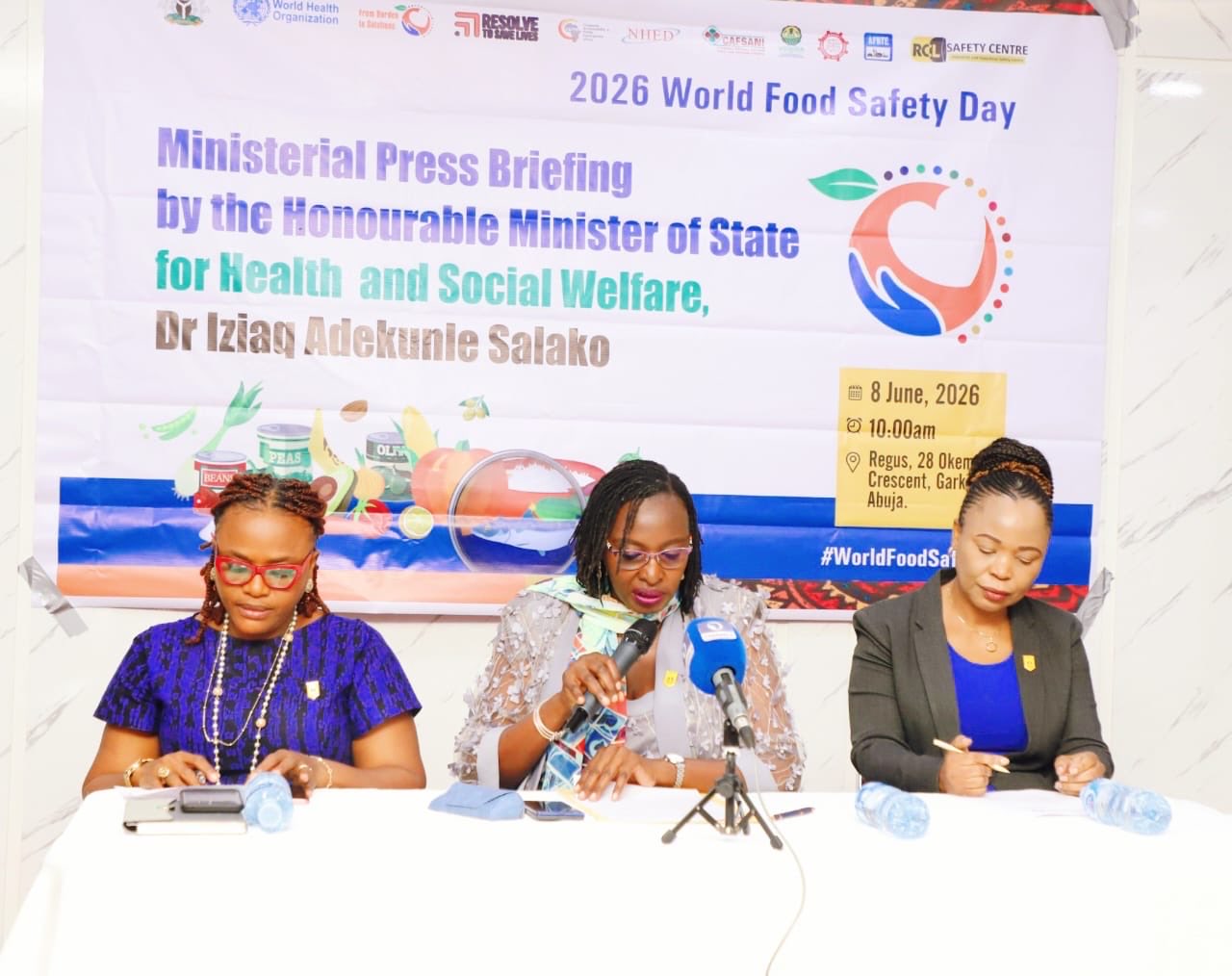
Salako delivered this assessment in Abuja during the observance of World Food Safety Day 2026, which carried the theme “From Burden to Solutions – Safe Food Everywhere.” The ministry shared his remarks in a statement on June 8.


The minister noted that children under five years old are disproportionately affected, with this age group representing over 80 percent of food-borne disease cases in Nigeria. He detailed that food-borne pathogens, including Salmonella, E. coli, Campylobacter, Shigella, and Rotavirus, are linked to more than 40 million cases of diarrheal illnesses.
“Food safety is not merely a technical issue; it is a national development priority,” Salako stated. He emphasized the broader implications of unsafe food, which extend beyond health issues to include the lost cognitive and developmental potential of children.
Salako highlighted Nigeria’s progress in food safety governance, mentioning the country’s Level 3 score in the 2025 State Party Annual Report (SPAR) as evidence of advancement beyond World Health Organization benchmarks for low- and middle-income countries in Sub-Saharan Africa.
He discussed several recent initiatives designed to enhance food safety, including the establishment of the National Food Safety Management Committee and the introduction of the 2023 National Integrated Guidelines for Food-borne Disease Surveillance and Response. These measures aim to bolster outbreak detection, laboratory confirmation, food recall processes, and risk communication across the nation.
The minister also outlined ongoing policy efforts aimed at promoting healthier diets and mitigating the risk of non-communicable diseases. These initiatives include sodium reduction guidelines, regulations for trans-fat elimination, initiatives to strengthen taxation on sugar-sweetened beverages, and the development of front-of-pack labeling systems.
Balarabe Abbas Lawal, the Minister of Environment, pointed out the connection between food-borne diseases and environmental factors such as poor sanitation, unsafe water, pollution, climate change, and inadequate waste management.
Daju Kachollom, Permanent Secretary at the Federal Ministry of Health and Social Welfare, called the 2026 theme a timely reminder for coordinated national action. She stressed the necessity of integrating food safety and healthy diet policies across various sectors to effectively protect public health and foster stronger inter-agency collaboration.
Dr. Pindar Wakawa, a representative of the World Health Organization, delivered a goodwill message underscoring that safe food is a fundamental human right and essential for public health and economic productivity. He noted that many food-borne diseases are preventable and urged for enhanced measures to protect children, tackle emerging risks like chemical contamination, and strengthen global food safety systems.