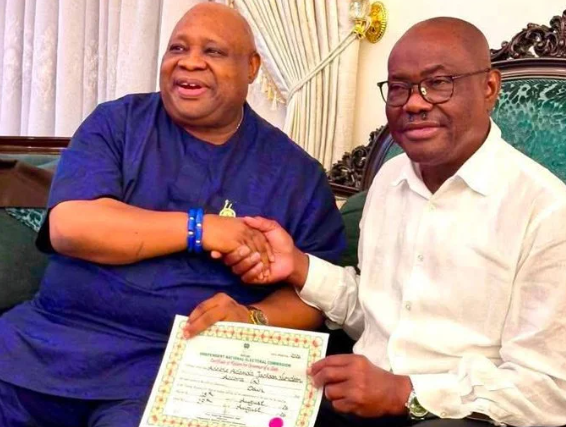
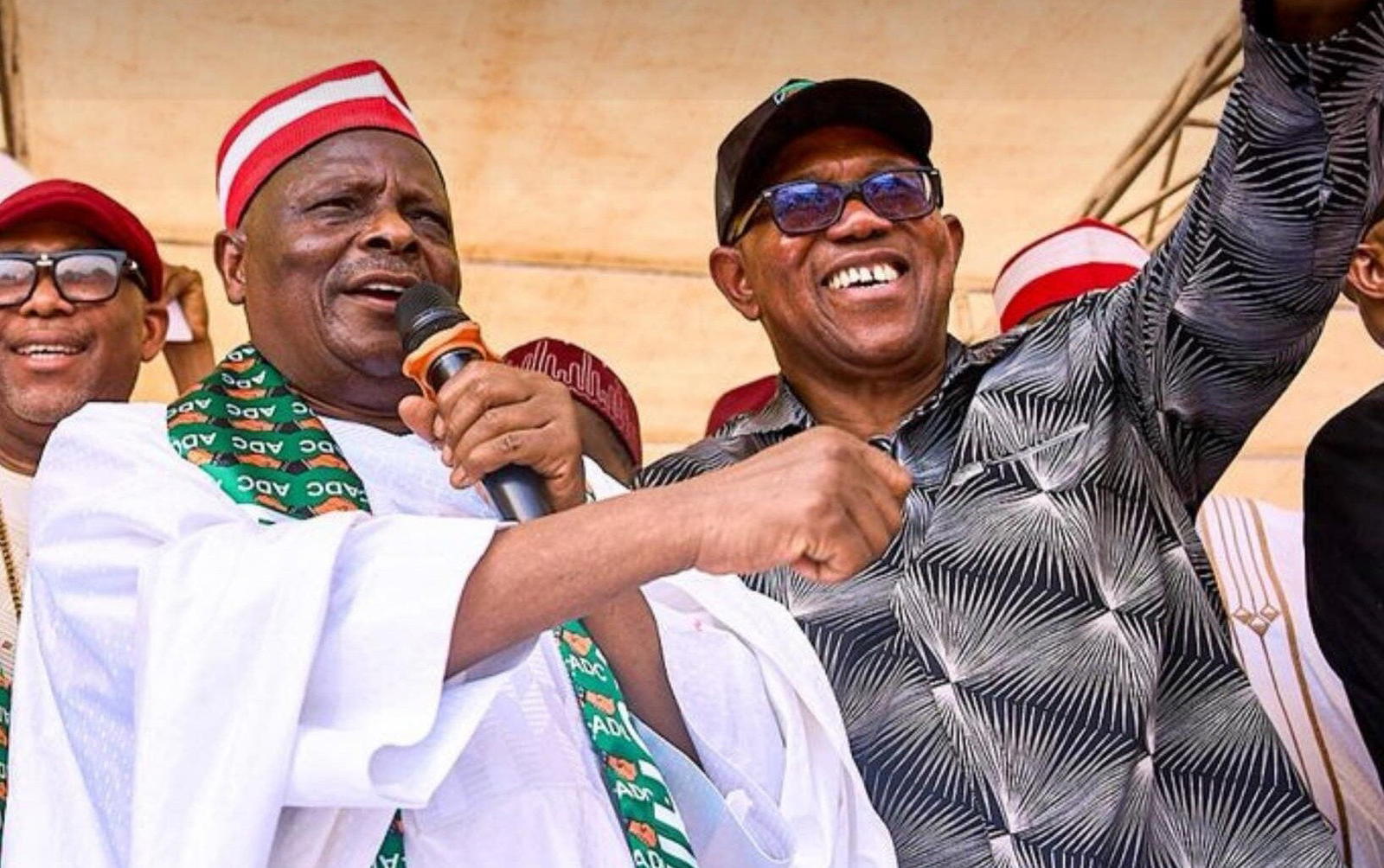
‘Jonathan, Atiku, Obi doing Tinubu’s campaign work for him’
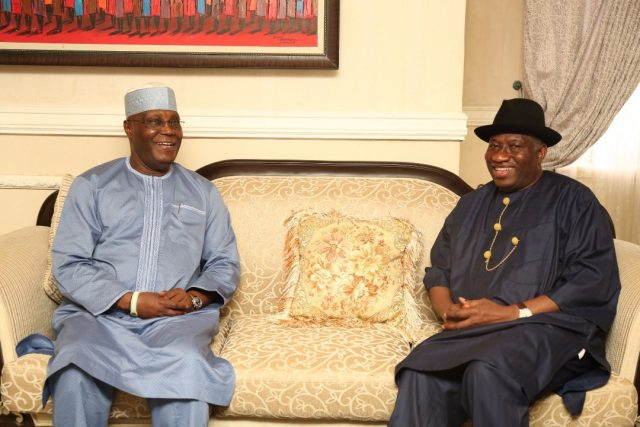
President Tinubu Enters 2027 Election as Frontrunner Despite Low Approval Ratings
By Omeiza Ajayi
ABUJA — President Bola Ahmed Tinubu is poised to be the leading candidate in the 2027 presidential election, according to a forecast from CellHub, a political consulting and data analysis firm. The report attributes Tinubu’s advantageous position not to widespread popularity but to the divided state of his opposition.

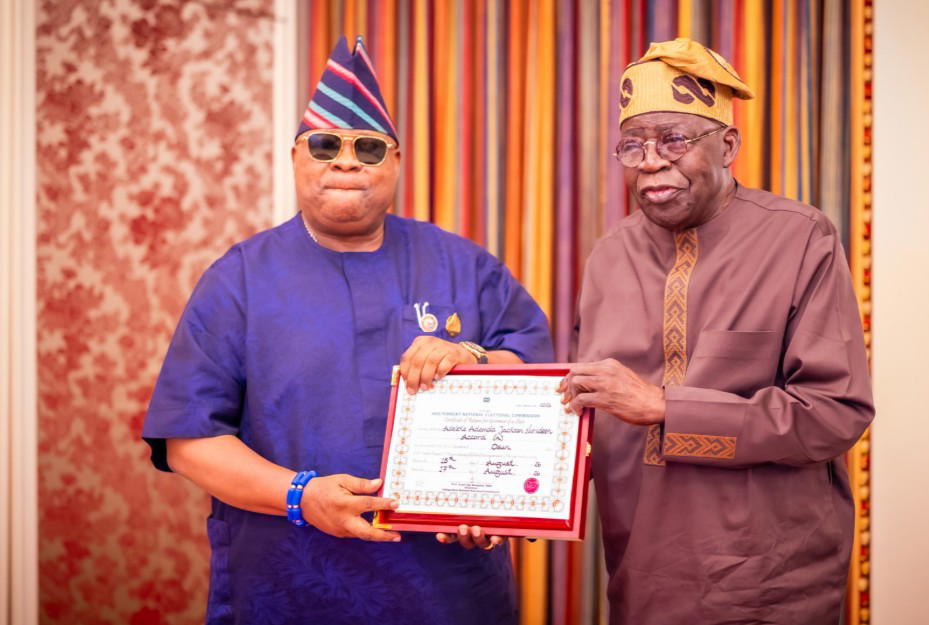
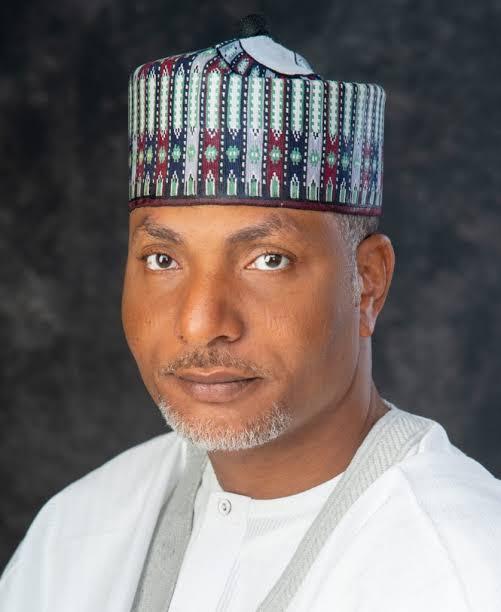
CellHub projects Tinubu, whose approval ratings are currently around 30 percent, as the frontrunner primarily due to the fragmented opposition and Nigeria’s electoral system, which favors the candidate with the most votes rather than an outright majority.
The firm highlighted the results of the 2023 presidential election, where Tinubu won with 36.61 percent of the valid votes, in comparison to Atiku Abubakar’s 29.07 percent, Peter Obi’s 25.40 percent, and Rabiu Musa Kwankwaso’s 6.23 percent. The division among the opposition candidates allowed Tinubu to secure a significant victory, despite over 60 percent of votes being cast for other candidates.
Ahead of the 2027 election, the opposition landscape remains similarly fragmented. Atiku Abubakar is running on the African Democratic Congress (ADC) ticket alongside Rotimi Amaechi, while Peter Obi and Rabiu Kwankwaso are candidates for the Nigeria Democratic Congress (NDC). Additionally, a faction of the Peoples Democratic Party (PDP) is backing Goodluck Jonathan, although his nomination is contested within the party.
The report indicates that with three notable opposition candidates competing for the anti-incumbent vote, Tinubu’s position is further solidified. It notes a series of defections that have consolidated control of 31 of Nigeria’s 36 states and a two-thirds majority in the National Assembly for Tinubu’s All Progressives Congress (APC). The party officially announced him as its candidate on May 23.
CellHub also reflected on historical trends, noting that among Nigeria’s elected presidents, only Jonathan has failed to win reelection, primarily due to a united opposition coalition—a strategy that currently eludes the present opposition.
“Our modeling emphasizes distribution rather than sentiment,” said Mohammed Aliyu, Managing Partner and Lead Data Scientist at CellHub. “A united bloc tends to outperform a divided one, regardless of public mood. Currently, the opposition is fragmented, while the governing party stands unified.”
While many Nigerians report worsening economic conditions since 2023, CellHub argues that this sentiment would pose a greater threat to Tinubu in a direct one-on-one contest against a united opposition.
The firm also scrutinized perceptions regarding Obi’s electoral strength, stating that his significant online following does not guarantee an equivalent number of votes. The report suggests that social media engagement skews young and urban, while rural northern voters, who historically demonstrate higher turnout rates, remain less active online.
CellHub’s conclusions are based on voting intentions and turnout probabilities across Nigeria’s geopolitical zones, as opposed to social media metrics. The report also noted that the administration’s defense of key economic policies, including the removal of fuel subsidies and the floating of the naira, is gaining traction among some voters.
Despite showing improvement in macroeconomic indicators, such as growth, foreign reserves, and inflation, the report acknowledges that household incomes and poverty levels have declined. Nevertheless, more voters appear to be accepting the government’s argument that these reforms have prevented a deeper economic crisis.
Geographically, the North-Central region and broader Middle Belt are seen as crucial battlegrounds for the upcoming election. “The South-West seems largely decided, while the South-East leans in the opposite direction,” said Efemena Peter, Senior Political Risk Analyst at CellHub. “The outcome will hinge on the North-Central and the Federal Capital Territory. Those states shifted against the President in 2023, and we are closely monitoring them for the 2027 election. The candidate who secures the Middle Belt is likely to carry the election.”
However, the analysis by CellHub notes that a merger between Atiku and Obi’s factions could significantly alter the political dynamics, transforming the election into a direct contest focused on the incumbent’s record. Such a development would render the outcome less predictable.
Until then, CellHub maintains that the division among opposition candidates continues to favor Tinubu. The firm plans to update its projections quarterly leading up to the elections scheduled for January 16, 2027.