Why I dumped Abacha’s transition programme – Gen. Abdulsalami
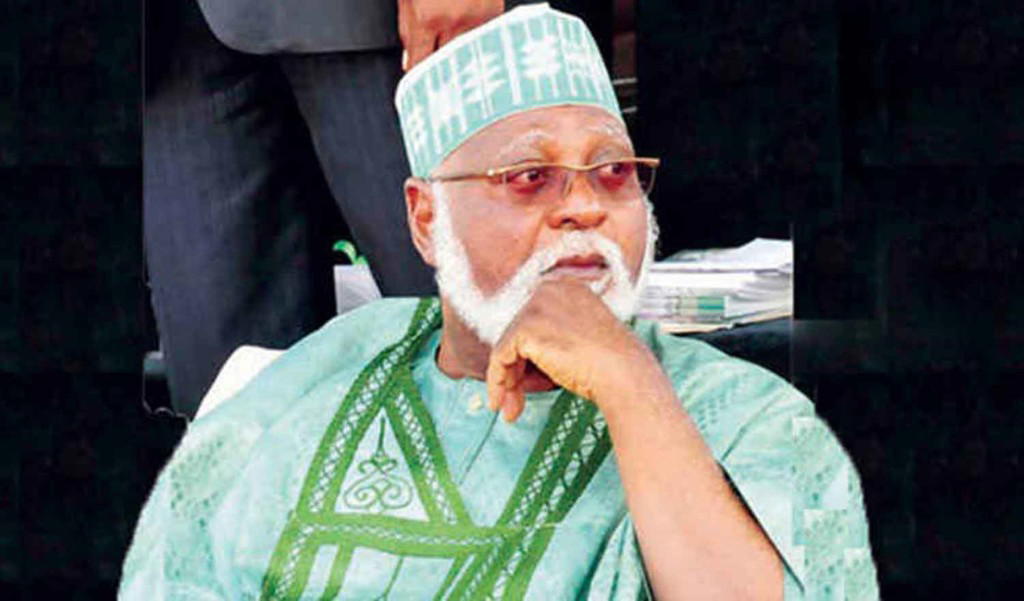
Abdulsalami Abubakar Discusses Abandonment of Abacha’s Transition Program
By Johnbosco Agbakwuru
ABUJA — General Abdulsalami Abubakar, the former Military Head of State, expressed concerns regarding the lack of credibility in the late General Sani Abacha’s transition program. He addressed these issues during the launch of his autobiography at the Presidential Villa on Saturday, coinciding with his 84th birthday.

Abubakar succeeded Abacha following his death on June 8, 1998. He stated that he had no interest in politics and found the transition program unviable. “The Abacha transition program obviously lacked credibility,” he said. “There was no way we were going to continue with it.”
He described an environment that was politically uncertain, characterized by a recent announcement of a transition to democracy by October 1, 1998, and an unclear picture regarding presidential elections. While Abacha had been adopted as a candidate by multiple political parties, he had not formally declared his intentions.
After assuming power, Abubakar consulted widely with both civilians and military leaders, determining that a shorter transition period was necessary. His initial proposal sought a six-month transition plan, intending to establish civilian governance by March 1999. However, due to judicial requirements identified by Justice Muhammadu Uwais, the Chief Justice of Nigeria, the transition was extended to May 1999.
Abubakar reported receiving significant pressure from multiple sources, including some leaders from the West African sub-region and members of the international community, who cautioned against a quick transition. He noted that initially, some members of the National Democratic Coalition (NADECO) had expressed reluctance but later sought more time to prepare for their political engagement.
“I asked that if they wanted me to extend the transition program, they should formally request it,” Abubakar said. “They never did, and we proceeded with our original plan.”
While he faced opposition among military personnel regarding power cession, Abubakar emphasized his commitment to transitioning to democracy. He stated that many military officers were resistant to relinquishing control, yet he remained resolute, recognizing the necessity for the military to return to its core functions.
“By the time I took over, the country was on edge,” he recalled, noting that the military had been deeply involved in governance at the expense of discipline and professionalism.
Abubakar also examined the challenges presented by political fragmentation, particularly in the southwestern region of Nigeria, where the political bloc NADECO formed the Alliance for Democracy instead of collaborating to create inclusive national parties.
The former military leader concluded that while the transition program faced numerous obstacles, his determination to facilitate a smooth transition was crucial to its ultimate success.